Colourinn Industries – Textile & Dyes Auxiliaries Manufacturer & Exporter

Blog

  1. Home
  2. /
  3. Blog

2026 Best Textile Finishing Chemicals for Global Buyers?

Choosing the right textile finishing chemicals in 2026 takes more than comparing prices or product labels. Global buyers must consider fabric type, end use, processing conditions, and the requirements of each target market. A softener that performs well on cotton may not suit a polyester blend. Small trials matter.

This guide examines the main chemical categories used to improve softness, moisture management, wrinkle resistance, color performance, and other fabric properties. It also highlights practical questions for supplier evaluation: Can the product work with existing equipment? What application conditions does the supplier recommend? Are safety data sheets, technical data, and relevant compliance documents available? Clear documentation helps buyers assess products, though it cannot replace their own testing.

Production details often change the result. Water hardness, bath temperature, dosage, and drying conditions can all affect finish consistency. A sample treated in a laboratory may behave differently on a high-speed production line. That gap deserves attention. Buyers should request representative samples, review performance data, and run controlled trials before making large commitments. Claims such as “eco-friendly” or “high performance” also need context and evidence.

The sections ahead offer a practical framework for comparing options and discussing requirements with manufacturers. They are not a substitute for site-specific testing or qualified technical advice. Textile finishing is rarely one-size-fits-all, and some choices involve trade-offs between handle, durability, cost, and processing simplicity. Careful evaluation can reduce avoidable surprises.

2026 Best Textile Finishing Chemicals for Global Buyers?

Textile Finishing Chemicals: Purpose and Role in Fabric Production

2026 Best Textile Finishing Chemicals for Global Buyers?

Textile Finishing Chemicals: Purpose and Role in Fabric Production

Finishing chemicals give fabric its final performance and feel. Applied after processes such as dyeing, they can improve softness, crease recovery, absorbency, or resistance to water and stains. A softener changes how cloth drapes across the hand. A water-repellent finish affects how droplets bead on its surface. The right treatment depends on fiber type, end use, and required durability. It should also suit the mill’s equipment and washing conditions.

Textile Exchange’s Materials Market Report 2024 estimates that global fiber production reached 124 million tonnes in 2023. That scale makes careful chemical selection consequential. UNEP’s 2023 report on sustainability and circularity in the textile value chain estimates the sector contributes 2–8% of global greenhouse gas emissions. These figures describe the wider industry, not finishing alone, but they underline why mills should assess energy, water, and chemical use together. Small details matter. A finish that works on a sample may behave differently on a full production run. Testing is essential, though it cannot remove every trade-off: greater durability may affect softness or recyclability. Buyers should request clear performance data and trial results, not rely on broad claims.

2026 Best Textile Finishing Chemicals for Global Buyers?

Textile Finishing Chemicals: Purpose and Role in Fabric Production

Finishing chemistry helps add properties such as wrinkle resistance, water repellency, and print durability. The chart shows indicative curing-temperature ranges used for selected applications—not a ranking or a universal recipe. Actual settings depend on the chemical formulation, fabric, equipment, and supplier instructions.

Main Categories of Textile Finishing Chemicals and Their Uses

2026 Best Textile Finishing Chemicals for Global Buyers?

Main Categories of Textile Finishing Chemicals and Their Uses

Textile finishing chemicals help fabrics feel, perform, and look different after dyeing. Softeners reduce a crisp hand, giving cotton shirts a smoother drape. Wrinkle-resistant finishes help garments retain shape after washing, while water-repellent treatments can slow surface wetting on outdoor fabrics. These effects depend on fabric type and processing conditions.

Other categories include flame-retardant, antistatic, and soil-release finishes. Each serves a specific purpose: antistatic agents can reduce cling in synthetic garments, while soil-release treatments help stains lift during laundering. Finishes may change color, breathability, or softness. Test them on the actual fabric, then check performance after repeated washing. One trial is not enough. Results can vary.

Tips: Ask suppliers for technical data and test small fabric samples before production. Check hand feel, color, and durability after washing. A finish that performs well on one fabric may disappoint on another.

How to Evaluate Performance, Safety, and Fabric Compatibility

2026 Best Textile Finishing Chemicals for Global Buyers?

Selecting textile finishing chemicals starts with the fabric’s intended use, not a sales claim. A softener that feels smooth on a cotton swatch may dull the color or alter absorbency on a blended fabric. Ask for test data that matches the fiber, finish, and process conditions you actually use. Then compare measurable results, such as wash durability, hand feel, whiteness, or water repellency. A lab result can look excellent and still disappoint on a production line. Small trials matter.

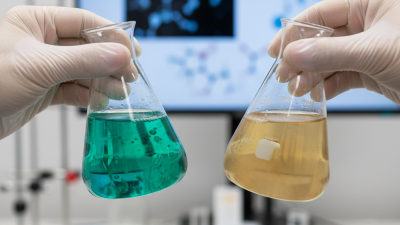
Review the safety data sheet, handling instructions, storage needs, and recommended protective measures before sampling. Confirm that the documentation is current and suitable for your team’s process and destination markets. Check compatibility with dyes, resins, and other bath components; a small beaker test can reveal haze, separation, or unexpected shade change. Keep records, too. Note dosage, bath temperature, pH, drying conditions, and results after repeated washing. No scorecard captures every mill condition, and that limitation is easy to overlook. If information is incomplete, ask the supplier for clarification rather than assuming the chemical will behave consistently.

2026 Best Textile Finishing Chemicals for Global Buyers? - How to Evaluate Performance, Safety, and Fabric Compatibility

This comparison summarizes common finishing-chemical families, their typical uses, and practical evaluation points. Suitability depends on the exact formulation, process conditions, fabric construction, and destination-market requirements; review the current technical data sheet (TDS), safety data sheet (SDS), and applicable regulations before purchase.

Chemical family Typical purpose Performance to evaluate Fabric compatibility and process notes Safety and compliance checks
Silicone softeners
Including amino-functional and nonionic types
Improve softness, smoothness, and drape; some types can enhance sewability. Assess hand feel, yellowing, absorbency, shade change, durability to laundering, and effects on later printing or coating. Used on many cotton, polyester, and blended fabrics. Cationic or amino-functional products may interact with anionic auxiliaries; check bath compatibility and run a lab trial. Check SDS hazards, residuals, wastewater considerations, and any customer restricted-substance list. Confirm whether the product is suitable for the intended end use.
Hydrophilic silicone softeners Provide a soft hand while helping retain or improve water absorbency compared with many conventional hydrophobic softeners. Measure absorbency, softness, whiteness, durability, and performance after repeated laundering using the buyer’s test methods. Often considered for towels, knitwear, and fabrics where absorbency matters. Actual results depend on formulation, dosage, curing, and preceding treatments. Review the SDS and formulation-specific regulatory declarations. Do not infer skin-contact suitability from the chemical family alone.
Fluorine-free water-repellent finishes
Often based on hydrocarbon, silicone, or polymer systems
Reduce wetting by water; some formulations also provide limited resistance to water-based stains. Test spray rating or other specified water-repellency method, durability to laundering, breathability, hand, and any required oil-repellency performance. Can be used on various woven and knitted substrates, subject to the product’s application instructions. Repellency may reduce absorbency and can be affected by softeners or residues. “Fluorine-free” does not by itself establish overall safety or environmental impact. Request composition and regulatory documentation, and check market-specific PFAS restrictions and customer requirements.
Cellulase enzymes Biopolishing of cellulosic fabrics to reduce surface fuzz and pilling; certain processes use cellulases for denim abrasion effects. Evaluate surface appearance, pilling, strength loss, shade change, and consistency across production lots. Primarily relevant to cotton and other cellulose-based materials. Enzyme activity depends on pH, temperature, time, and inactivation or wash-off conditions. Enzyme powders or aerosols may cause respiratory sensitization. Follow SDS handling controls, minimize dust or aerosol generation, and use the specified protective measures.
Easy-care crosslinking resins
Including formaldehyde-releasing and formaldehyde-free systems
Improve crease recovery and dimensional stability, most commonly in cellulosic fabrics. Assess crease-recovery performance, tensile and tear-strength retention, shrinkage, wash durability, and residual formaldehyde where relevant. Most suitable for cotton and cellulosic blends. Cure conditions and catalyst choice influence performance, fabric strength, handle, and shade. Check the SDS, formaldehyde content or release information, worker-exposure controls, and limits applicable to the destination market and product category.
Optical brightening agents (OBAs) Increase perceived whiteness or brightness by absorbing ultraviolet light and emitting visible blue light. Check whiteness index, shade, light fastness, wash fastness, and consistency under the intended measurement conditions. Different chemistries are suited to different fibers and application conditions. Confirm compatibility with dyes, auxiliaries, and the fabric’s intended color or print design. Review SDS and customer restricted-substance requirements. Confirm suitability for the intended application, especially for products with specific consumer-contact requirements.
Antimicrobial textile finishes Provide a specified antimicrobial function when the product, application, and claims are authorized and substantiated. Evaluate efficacy using a relevant test method, durability after laundering, odor-control claims, and effects on color and hand. Compatibility and durability vary widely with active ingredient, fiber, application method, and laundering conditions. Validate on the finished article. Biocidal-product and treated-article rules differ by market. Verify authorization, labeling, permitted claims, worker controls, and applicable environmental requirements before use.
Flame-retardant finishes Help meet a defined flammability performance requirement for a specific textile end use. Test the finished product against the applicable standard, including durability requirements where specified; assess strength, color, hand, and smoke-related requirements if relevant. Performance depends on fiber composition, construction, add-on, and process. A finish suitable for one substrate or standard may not work for another. Review the exact chemistry and SDS, and check restrictions for the product category and destination market. Do not rely on a chemical claim as a substitute for finished-product testing.

Buyer checklist: Request a current TDS and SDS, full application and curing guidance, applicable compliance declarations, and test data for the intended fabric. Conduct compatibility, shade, hand-feel, durability, and finished-product safety trials at production-relevant conditions before approval.

Global Sourcing Factors for Textile Finishing Chemicals in 2026

Global buyers choosing textile finishing chemicals in 2026 need more than a low quoted price. They should compare function, process fit, supply reliability, and technical support. A softener may feel smooth on a lab swatch but behave differently on a high-speed line. Ask for current technical data, safety information, recommended dosage, storage conditions, and batch traceability. Then test samples on the actual fabric and equipment. Small trials matter.

Tips: Request a sample from a production lot, not only a showcase sample. Record pH, temperature, bath ratio, curing conditions, and fabric feel after washing. Confirm lead times and packaging options in writing. Keep a second qualified source where practical. It helps.

For cross-border sourcing, assess shipping stability and local technical assistance alongside product performance. Check that documents match the material supplied and are clear to operators. Discuss consistency tolerances and change-notification procedures before repeat orders. A supplier’s quick reply is useful, but it cannot replace a controlled trial. Costs may shift with freight or formulation changes; no forecast is perfect. Leave room for that uncertainty rather than choosing solely by unit price.

Sustainability Standards and Regulatory Requirements for Buyers

2026 Best Textile Finishing Chemicals for Global Buyers?

Sustainability Standards and Regulatory Requirements for Buyers

Global textile production reached 124 million tonnes in 2023, according to Textile Exchange’s 2024 Materials Market Report. The report projects 160 million tonnes by 2030. This growth increases scrutiny of finishing chemicals, especially durable water repellents, softeners, and crosslinking agents. Buyers should request full safety data sheets, ingredient disclosures, CAS numbers, and restricted-substance declarations before approval. A polished technical sheet is not enough.

For European shipments, suppliers must consider REACH restrictions, CLP hazard communication, and SVHC disclosure duties. Article 33 generally requires communication when a substance of very high concern exceeds 0.1% in an article. Buyers should also screen formulations against the current ZDHC Manufacturing Restricted Substances List and review wastewater test results. The ZDHC Wastewater Guidelines provide practical parameters for chemical oxygen demand, heavy metals, and other pollutants. Requirements still vary by product and destination.

Ask for batch-level test reports, not only annual certificates. Check pH, formaldehyde, alkylphenol ethoxylates, residual solvents, and fluorinated chemistry where relevant. Textile Exchange data supports recycled-material growth, but recycled inputs can carry legacy contaminants. That risk is often underestimated. A compliant document does not prove factory control. Small pilot trials, worker exposure reviews, and independent laboratory verification remain valuable. Some suppliers may resist deeper disclosure. That is a warning sign.