
China Top Textile Chemical Processing Manufacturers?
China has become a major sourcing base for textile chemical processing, supported by broad manufacturing capacity and integrated supply chains. However, production scale alone does not prove technical leadership. Buyers must examine formulation quality, application support, wastewater controls, and supply reliability.
Textile Exchange’s Materials Market Report 2024 estimated global fiber production at 124 million tonnes in 2023. It also projected growth toward approximately 160 million tonnes by 2030. This expansion increases demand for dyes, auxiliaries, pretreatment agents, softeners, and finishing chemicals. The ZDHC Manufacturing Restricted Substances List further shows why chemical selection requires documented hazard management and process transparency. Safer chemistry is not simply a marketing phrase.
This guide reviews China’s leading textile chemical processing manufacturers through practical, evidence-based criteria. These include product consistency, laboratory testing, export experience, certifications, technical service, and wastewater management. Company information should be checked against current certificates and verified production records. Conditions can change quickly.
The list is not perfectly objective. Public data varies between manufacturers. Some companies disclose more than others. That limitation matters. A strong supplier should explain how its products perform on cotton, polyester, blends, and recycled fibers. It should also provide clear dosage guidance, batch traceability, and test results for colorfastness, softness, and durability. These details help mills reduce rework, control water consumption, and meet brand compliance expectations. The final selection should match the buyer’s fabric, machinery, destination market, and sustainability targets.
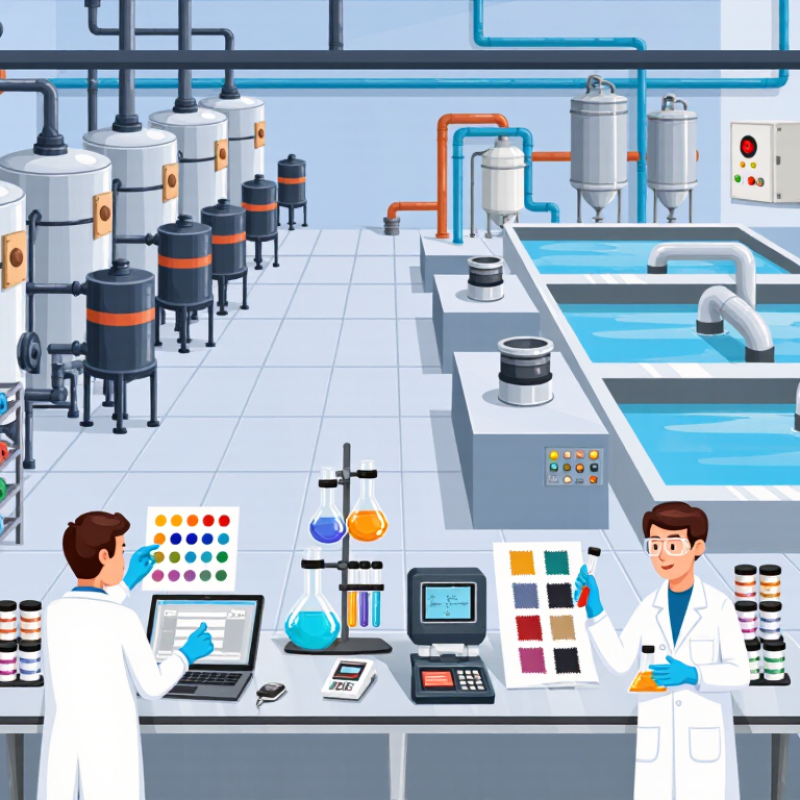
What Are Textile Chemical Processing Manufacturers in China?
China textile chemical processing manufacturers are companies that develop and produce chemicals for fabric treatment. Their products may include dyes, softeners, wetting agents, waterproofing finishes, and printing auxiliaries. Some also provide technical support inside textile mills.
Their work usually begins with laboratory trials. Technicians test fabric absorbency, color fastness, pH, and shrinkage. They may adjust a formula after a small sample wash. Production teams then monitor mixing temperature, dosage, and drying conditions. Reliable manufacturers provide safety data sheets, batch records, test reports, and clear storage guidance. They should also explain wastewater controls and follow applicable chemical safety requirements. Experience matters here. A formula that works on cotton may fail on polyester or blended fabric. That detail is easy to underestimate.
Tips: Ask for a sample trial before placing a large order. Request recent test data and production records. Check whether the factory can support your fabric type and finishing process. Visit the facility when practical. A low price can be useful, but it may hide inconsistent strength or weak technical support. No manufacturer is perfect, and even experienced teams can miss a process variable. Discuss possible failures openly, such as uneven shade, harsh hand feel, or poor wash durability. Clear communication often reveals more than a polished brochure.
China Top Textile Chemical Processing Manufacturers? - What Are Textile Chemical Processing Manufacturers in China?
| Chemical Category | Representative Chemical or Product Type | Main Textile Processing Stage | Primary Function | Common Fiber or Fabric Applications | Typical Technical Parameters | Important Handling or Compliance Considerations |
|---|---|---|---|---|---|---|
| Scouring and Mercerizing Chemicals | Sodium hydroxide (caustic soda) | Scouring, mercerizing and alkaline preparation | Removes oils, waxes, pectin and other impurities; increases cotton absorbency | Cotton, viscose and cellulose-blended fabrics | CAS No. 1310-73-2; supplied as solid flakes, pearls or aqueous solution | Strongly corrosive; requires controlled dosing, compatible equipment and wastewater neutralization |
| Bleaching Agents | Hydrogen peroxide | Bleaching and preparation before dyeing or printing | Oxidizes natural coloring matter and improves fabric whiteness | Cotton, linen, viscose and other cellulosic textiles | CAS No. 7722-84-1; commonly used in aqueous solutions of different concentrations | Oxidizing substance; decomposition is affected by temperature, pH, metals and stabilizer selection |
| Wetting and Detergent Auxiliaries | Nonionic or anionic surfactants | Desizing, scouring, washing and dye-bath preparation | Lowers surface tension and helps remove oils, dirt and processing residues | Cotton, polyester, nylon and blended fabrics | Performance is typically assessed by wetting time, detergency, foam profile and compatibility | Formulations should be evaluated for biodegradability, aquatic toxicity, foam control and restricted substances |
| Desizing Agents | Amylase enzymes and oxidative desizing systems | Removal of warp sizing before scouring and dyeing | Breaks down starch-based or other sizing materials | Woven cotton and cotton-blended fabrics | Enzyme activity is commonly specified by standardized activity units; operating pH and temperature are product-dependent | Storage temperature and pH control are important; enzyme aerosols may cause occupational sensitization |
| Dyeing Chemicals | Reactive, disperse, acid and direct dye systems | Exhaust dyeing, continuous dyeing and pad-dyeing | Provides color through fiber-specific dye-fiber interactions | Reactive dyes for cellulose; disperse dyes for polyester; acid dyes for nylon and wool | Evaluated by shade strength, fixation, wash fastness, light fastness and migration behavior | Formulations must be screened for banned amines, heavy metals, allergenic dyes and other restricted substances |
| Dye Fixing and After-Treatment Agents | Cationic fixing agents and after-soaping agents | Post-dyeing washing and color-fixing treatment | Improves wet fastness and removes unfixed surface dye | Cellulosic fabrics dyed with reactive or direct dyes | Assessed by washing, rubbing and perspiration fastness tests | Excessive cationic treatment can affect shade, handle and compatibility with subsequent finishing |
| pH Regulators and Dye-Bath Salts | Acetic acid, sodium carbonate and sodium chloride | Dye-bath preparation and pH adjustment | Controls dye fixation, exhaustion, ionic strength and process stability | Cotton, viscose, polyester and polyamide, depending on dye class | Acetic acid CAS No. 64-19-7; sodium carbonate CAS No. 497-19-8; sodium chloride CAS No. 7647-14-5 | Salt and alkalinity loads can increase wastewater treatment requirements and total dissolved solids |
| Reducing Agents | Sodium hydrosulfite and reducing auxiliaries | Vat dyeing, sulfur dyeing and color stripping | Creates reducing conditions for selected dyes or removes unwanted color | Cellulosic fabrics using vat or sulfur dye systems | Sodium hydrosulfite CAS No. 7775-14-6; performance depends on redox potential and bath conditions | Can release sulfur dioxide under acidic conditions; requires ventilation, safe storage and controlled oxidation |
| Softening Agents | Cationic, nonionic, silicone and fatty-acid-based softeners | Mechanical finishing, padding and garment finishing | Improves hand feel, smoothness, drape and sewability | Knitted and woven cotton, polyester, nylon and blended textiles | Evaluated by softness, hydrophilicity, yellowing tendency, friction and durability after washing | Selection must consider shade change, absorbency, fiber reactivity and wastewater biodegradability |
| Water- and Oil-Repellent Finishes | Fluorine-free or fluorocarbon-based repellent formulations | Functional finishing and durable water-repellent treatment | Reduces surface wetting and may provide resistance to water or oils | Outdoor apparel, workwear, upholstery and technical fabrics | Measured by spray rating, hydrostatic pressure, contact angle and durability after laundering | Fluorine-free alternatives are increasingly preferred; products should be checked against applicable PFAS and environmental requirements |
Note: Textile chemical processing manufacturers in China commonly supply formulation, blending, technical service and application support for preparation, dyeing, printing, finishing and wastewater-conscious production. Actual process conditions vary by fiber, fabric construction, machine type, liquor ratio and applicable chemical regulations.
Related Posts
-
Top Textile Chemicals and Auxiliaries Suppliers Worldwide?
-

Top Trends in Textile Chemical Industries for Sustainable Production?
-

Best Textile Chemicals List for Global Buyers?
-
What is a Comprehensive List of Textile Chemicals?
-
Top Textile Finishing Agents in 2025: Trends and Innovations to Watch
-
2026 Best Textile Chemicals for Global Buyers?