Blog
- Home
- /
- Blog
How to Choose Textile Chemicals and Auxiliaries in 2026?
In 2026, choosing textile chemicals and auxiliaries requires more than comparing prices or reading a supplier brochure. Mills must examine performance, safer chemistry, process efficiency, traceability, and regulatory readiness. A softener that creates a pleasant hand feel may still cause odor, wastewater, or durability problems. Small decisions can become expensive production failures.
Dr. Seshadri Ramkumar, a textile materials expert at Texas Tech University, has said, “Sustainability is not a destination; it is a journey.” This principle matters when selecting textile chemicals and auxiliaries. A responsible buyer should request technical data sheets, safety information, restricted-substance declarations, and evidence of batch consistency. Supplier transparency matters. So does practical experience.
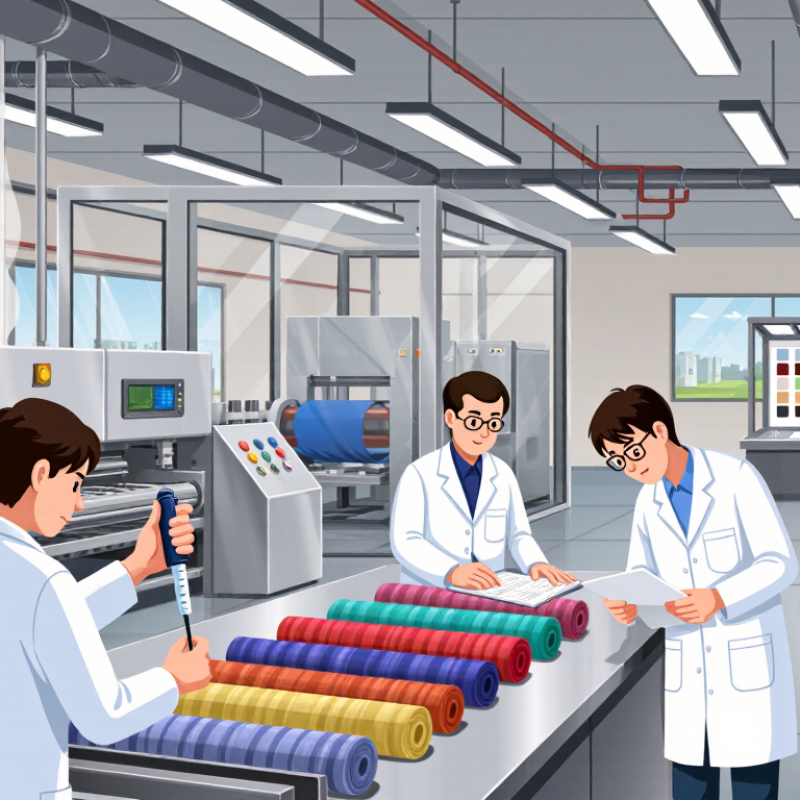
Run controlled trials on the actual fabric, machine, water quality, and temperature. Lab results can look excellent. Factory conditions may disagree. Check shade change, absorbency, rubbing fastness, fabric strength, foam behavior, and wastewater load. Measure chemical dosage carefully, because overdosing often hides process weaknesses.
The decision is rarely perfect. One product may improve softness but reduce re-dyeing flexibility. Another may offer a lower carbon profile but require stricter temperature control. That trade-off deserves honest documentation. Buyers should also question vague claims such as “eco-friendly” or “green formula.” They are not enough.
Reliable selection combines chemistry knowledge with production evidence. It also requires ongoing review as standards, customer requirements, and technologies change. The best choice is not always the newest product. It is the one that performs consistently, protects workers and water, supports legal compliance, and fits the mill’s real operating limits. Mistakes still happen. Good systems make them visible early.
Define Textile Chemical and Auxiliary Requirements by Fabric and Process
How to Choose Textile Chemicals and Auxiliaries in 2026?
Define requirements by fabric and process before comparing products. Cotton may need a low-foam wetting agent for rapid absorbency. Polyester often requires controlled dispersing, leveling, and reduction-clearing support. Wool needs gentler chemistry to protect softness, color, and fiber strength. Check the full process: preparation, dyeing, finishing, drying, and wastewater treatment. Record temperature, pH, liquor ratio, dosage, and machine type. These details matter more than a general product description.
Tips: Start with a small laboratory trial. Test shade, absorbency, whiteness, handle, and fastness. Then run a production-scale sample. Review the safety data sheet, restricted-substance status, biodegradability claims, and storage conditions. Ask for technical data, but verify it independently. A perfect choice on paper may still fail on a fast jet machine.
Experienced teams also consider fabric defects and operator handling. An auxiliary that performs well on stable cotton may create streaks on recycled fibers. Silicone softeners can improve hand feel, yet excessive dosage may reduce rewetting or affect sewing. I have seen trials pass in the lab and struggle in production. That is not unusual. Keep process notes, investigate variation, and leave room for adjustment. Reliable selection is specific, measured, and practical.
Assess Chemical Performance, Compatibility, and Regulatory Compliance
In 2026, textile chemical selection should start with evidence, not supplier promises. Textile Exchange’s 2024 Materials Market Report recorded global fibre production at 132 million tonnes in 2023. This scale increases pressure on consistent, lower-impact processing.
Test performance on the actual substrate. Check shade yield, whiteness, softness, fastness, and process stability. A chemical that performs well on cotton may fail on recycled polyester. Run laboratory trials, then confirm results through a controlled production batch. Measure pH, temperature, dosage, bath time, and wastewater indicators. Small variations can create visible defects.
Compatibility also requires careful document review. Compare the safety data sheet, technical data, impurities, and restricted-substance declarations. Screen every ingredient against destination-market rules, including REACH requirements and applicable MRSL limits. The ZDHC Foundation’s wastewater guidance emphasizes testing discharge parameters, not merely collecting certificates. That distinction matters. The European Environment Agency reported that EU textile consumption reached about 6.3 kilograms per person in 2020, showing the sector’s material footprint. I still treat compliance files as incomplete until batch traceability is verified. A certificate can be outdated. Ask for testing dates, laboratory methods, detection limits, and corrective-action records. Keep retained samples from each trial. Real factory conditions often expose problems that a polished laboratory report misses.
Compare Sustainability, Safety, and Environmental Impact
Choosing textile chemicals in 2026 requires more than checking a sustainability label. The European Environment Agency reports that EU textile consumption created about 270 kilograms of CO2 emissions per person in 2020. It also used roughly 9 cubic metres of water per person. These figures make process efficiency important. A chemical that works at lower temperatures can reduce energy use, but only if it maintains colour fastness and limits reprocessing. Small trials matter.
Safety should begin with the full safety data sheet, impurity information, and worker exposure controls. Review aquatic toxicity, biodegradability, chemical oxygen demand, and restricted-substance screening. The UN Environment Programme identifies chemicals and pollution as major environmental pressures across textile value chains. “Biodegradable” is not automatically harmless. Some substances degrade slowly in real wastewater, or create problematic by-products. Ask for test methods, not attractive wording.
Environmental comparison should include the entire application process. Measure water use, salt demand, rinsing cycles, sludge generation, and wastewater treatment performance. A concentrated auxiliary may reduce packaging and transport, yet overdosing can increase effluent pollution. The ZDHC wastewater guidance supports testing for priority chemical groups, but factory conditions still affect results. That is the difficult part. Supplier data can be incomplete, and laboratory performance may not match a crowded production floor. Choose documented evidence, run controlled trials, and record failures honestly.
How to Choose Textile Chemicals and Auxiliaries in 2026?
A practical comparison of sustainability, safety, regulatory exposure, and environmental impact
| Chemical or Auxiliary Category | Typical Textile Function | Key Sustainability Profile | Worker Safety Considerations | Wastewater and Environmental Impact | Regulatory or Restricted-Substance Considerations | Indicative Concern Score 1 = Lower, 5 = Higher |
2026 Selection Guidance |
|---|---|---|---|---|---|---|---|
| Hydrogen Peroxide | Bleaching of cotton and cellulosic fibres; removal of natural pigments. | Breaks down primarily into water and oxygen. Does not create persistent chlorinated organic by-products when used correctly. | Concentrated solutions are corrosive and strong oxidizers. Eye, skin, and respiratory protection are required during handling. | Residual peroxide can inhibit biological wastewater treatment, but it decomposes rapidly when properly controlled. Excessive dosing can damage aquatic organisms locally. | Requires controlled storage, segregation from combustible materials, and validated residual-peroxide removal before discharge. | 2 | Preferred Use automated dosing, low-temperature bleaching where possible, and monitor residual peroxide in the bath and effluent. |
| Enzymatic Preparations | Desizing, biopolishing, denim finishing, and removal of starch or surface fibre fuzz. | Often effective at lower temperatures and dosages than conventional chemical routes. Enzymes are generally biodegradable proteins. | Liquid enzymes are usually safer than dusty powders. Aerosolized enzyme dust or mist can cause occupational respiratory sensitization. | Biodegradable protein content usually contributes to biological oxygen demand, but enzyme residues are not normally persistent. | Follow the product safety data sheet, exposure controls, and local occupational limits. Avoid generating aerosols during preparation. | 2 | Preferred Select low-dust liquid formulations and use closed transfer or local exhaust ventilation. |
| APEO-Free Nonionic Surfactants | Wetting, scouring, washing, emulsification, and preparation of fibres and fabrics. | Modern alcohol-ethoxylate alternatives can provide good detergency without intentionally using alkylphenol ethoxylates. | Concentrated surfactants may irritate skin and eyes. Foam-control procedures and suitable gloves are necessary. | Biodegradability varies by chemistry. Select products with documented ready biodegradability and low aquatic toxicity. | Nonylphenol and nonylphenol ethoxylates are restricted in certain textile applications and supply chains, including EU-related requirements. | 2 | Preferred Request APEO/NPE testing, biodegradability data, and aquatic-toxicity information before approval. |
| Low-Formaldehyde or Formaldehyde-Free Resins | Easy-care, crease-resistant, dimensional-stability, and durable-press finishing of cellulosic fabrics. | Can reduce formaldehyde release compared with conventional durable-press systems, but may require higher curing control or different performance trade-offs. | Formaldehyde is a respiratory and skin irritant and is classified as carcinogenic to humans. Proper ventilation and exposure monitoring are important. | Residual formaldehyde can enter process water and air emissions. Finished fabrics should be tested for releasable formaldehyde. | Limits differ by market and product category. Testing should follow the applicable finished-product standard or buyer requirement. | 3 | Preferred Use low-emission systems, optimize curing, and verify finished-fabric formaldehyde rather than relying only on incoming chemical claims. |
| Fluorine-Free Water-Repellent Finishes | Water repellency for apparel, outdoor textiles, upholstery, and technical fabrics. | Avoids intentionally added per- and polyfluoroalkyl substances, which are highly persistent in the environment. | Risk depends on formulation. Apply adequate ventilation and prevent aerosol inhalation during spraying or padding. | Performance may be lower than fluorinated finishes for oil and chemical repellency. The formulation still requires aquatic-toxicity and biodegradability review. | Many markets and textile standards restrict or phase down intentionally added PFAS. Verify total fluorine or targeted PFAS results where required. | 2 | Preferred Use only when the required performance is water repellency rather than high oil or chemical repellency. |
| Fluorinated Durable Water Repellents | High-performance water, oil, and chemical repellency. | Some fluorinated chemistries can contain or degrade to highly persistent PFAS-related substances. End-of-life management is difficult. | Hazards vary by formulation and processing route. Avoid mist formation and follow strict process containment. | Persistent fluorinated substances may remain in wastewater, sludge, air emissions, or finished products. Conventional wastewater treatment does not reliably destroy PFAS. | Subject to expanding PFAS restrictions, reporting requirements, and buyer bans in multiple jurisdictions and voluntary standards. | 5 | Avoid Where Possible Consider only for documented critical-performance needs after regulatory, wastewater, and total-fluorine review. |
| Sodium Hydrosulfite | Reducing agent for vat and sulfur dyeing; colour stripping and reductive cleaning. | Useful for specific dye classes but has a high chemical oxygen demand impact when overdosed and can generate sulfite or sulfur-containing residues. | Can irritate or burn skin and eyes. Contact with acids may release sulfur dioxide; moisture and heat can accelerate decomposition. | Sulfite and sulfide residues can consume oxygen and may be toxic to aquatic life. Effluent oxidation and sulfide control may be required. | Storage, transport, worker exposure, and discharge controls are important. Never mix directly with acids. | 4 | Conditional Use only where technically necessary, with precise dosing, closed handling, and validated sulfide/sulfite treatment. |
| Aminosilicone Softener | Soft hand feel, lubricity, drape, and improved sewability. | Can improve product feel at low application levels, but silicone chemistry may be difficult to remove or recycle from some textile waste streams. | Generally low volatility in finished formulations, but concentrated emulsions can irritate eyes and skin. Avoid aerosol formation. | Environmental behavior varies by molecular structure and emulsion system. Some silicone materials are poorly biodegradable and may partition to sludge. | Review cyclic siloxanes, aquatic toxicity, residual monomers, and wastewater-sludge behavior where relevant. | 3 | Conditional Choose low-residual formulations, minimize dosage, and request substance-level environmental data. |
| Cationic Quaternary-Ammonium Softener | Softening and antistatic finishing, especially for cellulosic and blended fabrics. | Provides strong softening at relatively low add-on levels, but cationic surfactants can be less favourable than readily biodegradable alternatives. | Concentrates may cause serious eye irritation and can irritate skin. Use gloves, eye protection, and controlled dosing. | Many quaternary-ammonium compounds are toxic to aquatic organisms and can adsorb strongly to sludge. Poor dosing control can increase treatment burden. | Check biodegradability, aquatic toxicity, and restricted-substance lists for the specific active substance. | 4 | Conditional Prefer readily biodegradable cationic systems and control bath discharge to prevent concentrated releases. |
| GLDA or MGDA Chelating Agents | Metal-ion control in bleaching, dyeing, washing, and peroxide stabilization. | Readily biodegradable alternatives to persistent chelating agents such as EDTA in many applications; can improve process consistency and reduce metal-catalyzed peroxide decomposition. | Usually lower handling concern than strong mineral acids, but concentrated solutions may irritate skin and eyes. | Generally more favourable biodegradability profiles than EDTA. Performance and environmental behaviour still depend on concentration and formulation. | Verify the exact chelant, biodegradability claim, aquatic-toxicity data, and local discharge requirements. | 2 | Preferred Use biodegradable chelants where technically suitable and avoid unnecessary excess dosing. |
| EDTA-Based Chelating Agents | Sequestration of iron, copper, calcium, and other metal ions in textile wet processing. | Strong metal binding can improve process stability, but EDTA is not readily biodegradable and may mobilize heavy metals in the environment. | Generally manageable with standard chemical controls, although concentrated products may irritate eyes and skin. | Can pass through conventional biological wastewater treatment and persist in water. Metal-EDTA complexes may increase metal mobility. | May be restricted or discouraged by textile buyer standards and wastewater policies. Confirm local requirements. | 4 | Avoid Where Possible Replace with a documented biodegradable chelant when performance and process stability allow. |

Evaluate Suppliers, Product Quality, and Technical Support
How to Choose Textile Chemicals and Auxiliaries in 2026?
Supplier evaluation should begin with evidence, not polished presentations. In my production experience, reliable suppliers provide current safety data sheets, batch certificates, traceability records, and clear storage guidance. Ask where raw materials originate and how each batch is tested. A supplier should explain changes in formulation before delivery. This matters when a softener performs differently after a mill adjusts its water hardness. Request laboratory samples, then compare shade, handle, whiteness, and washing durability under your actual process conditions. One successful trial proves little.
Product quality needs measurable standards. Check viscosity, pH, ionic character, active content, and compatibility with dyes or finishing agents. Keep retain samples from every approved batch. They can reveal why a fabric suddenly feels harsh three weeks later. Small details count. Do not rely only on a certificate. Test performance after heat aging, storage, and repeated washing.
I once treated a stable laboratory result as enough evidence. It was not. The factory’s higher shear and longer circulation time exposed a problem that the laboratory missed.
Technical support should be practical and available during production, not only during sales discussions. Strong specialists can review recipes, inspect process temperatures, and recommend controlled dosage adjustments. They should provide written trial plans and explain potential defects without hiding uncertainty. Ask how quickly they respond to an urgent shade or foaming issue. Remote advice helps, but a site visit can reveal blocked filters, poor mixing, or inaccurate pumps. Suppliers should also support wastewater compatibility and changing regional requirements. Even experienced teams make assumptions. Record every adjustment, because memory is a weak quality system.
Run Trials and Select the Best Solution for 2026 Production Needs
Choosing textile chemicals and auxiliaries in 2026 should begin with controlled production trials, not attractive technical claims. Define the fabric, fiber blend, machine type, liquor ratio, and target shade before testing. Record pH, temperature, dosage, treatment time, and bath appearance. Small details matter.
Run each candidate on a laboratory sample, then repeat it on a pilot lot. Check levelness, color fastness, absorbency, softness, shrinkage, and fabric strength. Measure results after washing, drying, and conditioning. A formula that performs well in a beaker may behave differently in a 500-kilogram machine. Watch foam, sediment, and nozzle blockage during processing. These observations often reveal practical risks earlier than a specification sheet.
Use the same water source and fabric preparation for every comparison. Keep one variable unchanged while adjusting another. Compare total cost per finished kilogram, not only the chemical price. Review worker handling requirements, storage stability, wastewater impact, and supplier documentation. Our first trial was not perfect; the shade matched, but the hand became slightly harsh after drying. We adjusted the softener level and repeated the test. The second result was better, though not ideal. That is why production teams should approve solutions through repeatable trials, clear acceptance limits, and documented corrective actions before the 2026 order schedule begins.
How to Choose Textile Chemicals and Auxiliaries in 2026?
Run controlled trials and compare production-relevant performance before selecting the best solution for 2026 manufacturing needs.
The anonymous trial scores combine shade reproducibility, wash and rubbing fastness, process stability, wastewater impact, and chemical cost. Higher scores indicate stronger overall suitability. Final approval should also verify laboratory test methods, buyer requirements, restricted-substance compliance, and full-scale production consistency.
Related Posts
-
Top Textile Chemicals and Auxiliaries Suppliers Worldwide?
-
China Top Textile Chemical Processing Manufacturers?
-
How to Choose the Best Textile Industry Chemicals in 2026?
-
Top Trends in Textile Chemical Industries for Sustainable Production?
-
Best Textile Chemicals List for Global Buyers?
-
What is a Comprehensive List of Textile Chemicals?