Colourinn Industries – Textile & Dyes Auxiliaries Manufacturer & Exporter

Blog

  1. Home
  2. /
  3. Blog

Why Is Textile Colouring Important for Global Buyers?

For global buyers, textile colouring is more than choosing a shade from a swatch. It affects product appearance, consistency between production batches, delivery timelines, and how well a fabric performs after washing. A shirt that looks vivid under showroom lights may fade, bleed, or vary across sizes if dye selection and process control are weak. Buyers need to ask practical questions: Which fiber and dye system are involved? How is shade accuracy checked? What evidence supports claims about water, energy, and chemical management? Small details matter.

The scale is significant. Textile Exchange’s Materials Market Report 2024 estimates that global fiber production reached 124 million tonnes in 2023. That figure describes the broader fiber market, not dyeing alone, but it shows why sourcing decisions can have far-reaching effects. McKinsey and Global Fashion Agenda estimated that the apparel industry produced about 2.1 billion tonnes of greenhouse-gas emissions in 2018; this is an industry-wide estimate, not a measurement of colouring processes. Textile coloration expert M. L. Gulrajani’s technical work emphasizes matching dye chemistry and processing conditions to the fiber and desired shade. That is a useful buyer’s lens—not a substitute for supplier-specific data. Ask for test results, process details, and clear documentation, then compare like with like. Even careful sourcing has limits. A polished sustainability claim can still leave important questions unanswered.
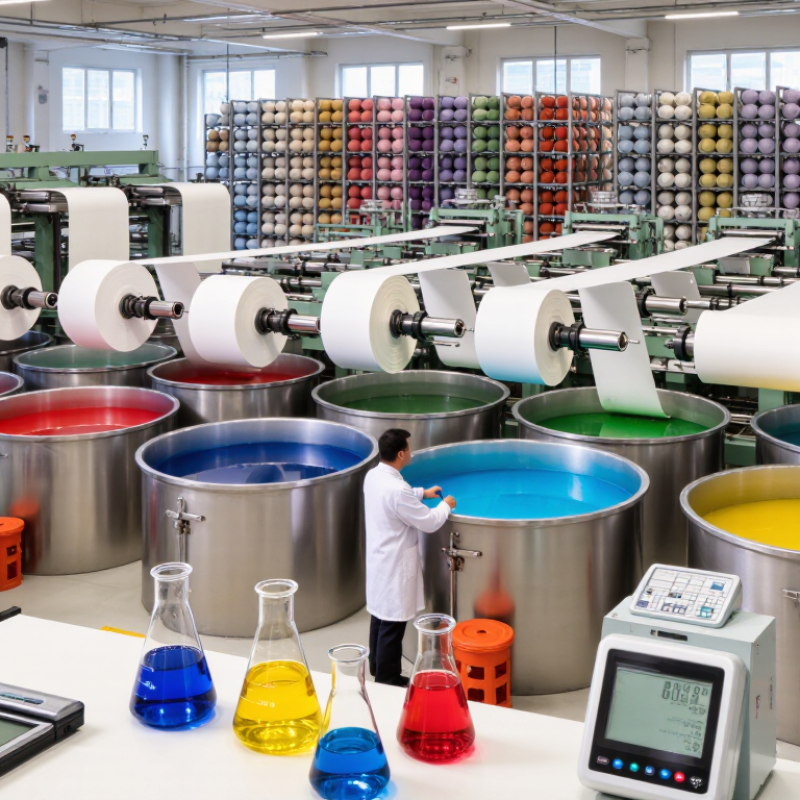
Why Is Textile Colouring Important for Global Buyers?

What Textile Colouring Means in the Global Supply Chain

Textile colouring is the controlled addition of colour to fibres, yarns, or fabric. In a global supply chain, it links design choices with mill capacity, material type, water use, and delivery schedules. A buyer’s colour specification becomes a production instruction: the dye recipe, temperature, processing time, and finishing steps must work together. Small differences matter. A pale blue can shift after washing, while a dark shade may need more processing to meet fastness requirements.

The scale is substantial. Textile Exchange’s Materials Market Report 2024 estimates that global fibre production reached about 124 million tonnes in 2023. That volume makes consistent colour control important across suppliers and production lots. The World Bank’s 2019 discussion of textile impacts cites estimates that dyeing and treatment contribute 17–20% of industrial water pollution worldwide. The figure depends on scope and methodology, so buyers should treat it as an indicator, not a universal measurement. Practical checks include reviewing mill test results, asking how colour fastness is verified, and comparing approved lab dips with bulk fabric. A lab dip is still only a sample. Production can differ, and buyers should leave room to question their own specifications when a shade, deadline, or process creates avoidable waste.

How Colour Is Applied to Different Textile Materials

Textile colour is applied in different ways because fibers absorb dyes differently. Cotton and linen are cellulose fibers, often coloured with reactive dyes in a water bath. Salt can help draw dye toward the fiber, while an alkaline stage helps it bond. The cloth is then washed to remove unfixed colour. A clear rinse is useful, but it cannot confirm every performance property. Shade matching is hard.

Polyester is commonly coloured with disperse dyes at high temperatures, allowing colour to enter the fiber. Wool and nylon often take acid dyes under controlled heat and pH. Gentler handling helps protect wool’s surface. Blended fabrics can be tricky: cotton-polyester may need separate dye systems for each fiber, followed by careful shade trials. Colour can also be added before spinning, during yarn production, or after fabric formation. These choices affect consistency, lead time, and fabric feel. Small lab swatches help, but they do not perfectly predict a full production run. Slight shade differences may appear across a fabric roll, so buyers should assess samples under agreed lighting rather than relying on a factory ceiling lamp.

Major Textile Colouring Methods and Their Uses

Textile colour choice begins with the stage at which colour enters production. In fiber or stock dyeing, loose fibers are dyed before spinning, creating blended, heathered shades. Yarn dyeing colours threads before weaving or knitting, making it useful for stripes and checks. Piece dyeing colours finished fabric efficiently, so it suits large runs of solid-colour garments. Garment dyeing happens after sewing and can create a softer, slightly varied appearance. Small batches matter. They can make garment dyeing practical, but shade consistency needs careful control.

The method also affects resource use and production flexibility. The Textile Exchange Materials Market Report 2024 estimates that global fiber production reached 124 million tonnes in 2023, with polyester accounting for 57 percent. For synthetic fabrics, solution dyeing adds pigment during fiber formation, reducing the need for a later dye bath. It can work well for repeat colours and high volumes, but offers less flexibility when buyers need frequent shade changes. Exhaust dyeing immerses fabric or yarn in a bath; continuous pad-dry processes apply colour across long fabric runs.

Digital textile printing deposits colour in selected areas, supporting detailed patterns and short orders with less setup. Yet print results depend on fabric preparation, ink chemistry, and fixation. There is no universally best route. Buyers should compare shade range, order size, fibre type, and verified water and energy data from suppliers. That last check is easy to skip. It should not be.

Why Is Textile Colouring Important for Global Buyers? — Major Textile Colouring Methods and Their Uses

Colouring Method When Colour Is Applied Common Fibres or Materials Typical Uses What Buyers Should Consider
Solution (Dope) Dyeing Pigment is added to the polymer before synthetic fibre is spun. Primarily manufactured fibres such as polyester, polypropylene and acrylic. Outdoor fabrics, carpets, upholstery, awnings and other products requiring colour that lasts through frequent use. Often provides strong colourfastness and can use less water in the coloration stage than conventional aqueous dyeing. Shade choices may be more limited, and minimum order quantities can be higher because colour is set during fibre production.
Fibre or Stock Dyeing Loose fibres are dyed before spinning. Wool and other staple fibres; suitability depends on the fibre and dye system. Melange yarns, tweeds and fabrics made with blended-colour fibres. Useful for subtle colour blends and mélange effects. Buyers should confirm shade consistency across fibre lots and allow for the additional handling and planning required before spinning.
Yarn Dyeing Yarn is dyed before it is knitted or woven. Cotton, wool, polyester and other fibres, using a dye system suited to the fibre. Checks, stripes, plaids, jacquard designs and other patterns with coloured yarns. Enables patterns to be built into the fabric. It usually requires colour and yarn planning before fabric production, so buyers should approve yarn shades and pattern placement early.
Piece Dyeing Knitted or woven fabric is dyed after fabric construction. Many natural and manufactured fibres; the dye and process must match the fibre. Solid-colour apparel fabrics, linings, home textiles and uniforms. Offers flexibility for solid shades after the fabric structure is selected. Buyers should check shade consistency, colourfastness and fabric performance, including any effects of processing on handle or dimensions.
Garment Dyeing Sewn garments are dyed after assembly. Most commonly suitable cotton garments; blends and trims need compatibility checks. Casualwear, washed-look styles and products where garment-level colour variation is part of the design. Can support flexible colour decisions later in production, but seams, trims and garment components may take colour differently. Buyers should evaluate shrinkage, shade variation and colour transfer before approving bulk production.
Textile Printing Colour is applied locally to create a pattern, either before or after fabric construction depending on the process. Cotton, polyester, silk and blends, with print chemistry selected for the fibre and end use. Floral, geometric and photographic designs for apparel, furnishings and accessories. Printing allows patterned colour without colouring the entire fabric uniformly. Buyers should assess print definition, colourfastness, hand feel and the suitability of the process for the fabric and order size.
Common Fibre-Specific Dye Systems Selected according to fibre type during yarn, fabric or garment processing. Reactive dyes are widely used for cellulosic fibres such as cotton; disperse dyes for polyester; acid dyes for wool and many nylon applications. Used to achieve solid shades in products ranging from cotton clothing to polyester sportswear and wool textiles. Correct fibre–dye matching is essential for shade development and fastness. Buyers should request test results relevant to intended use, such as washing, rubbing and light exposure.

Buyer takeaway: Colouring method affects available shades, order planning, pattern options, colourfastness and resource use. The best choice depends on fibre composition, product design, required performance and production volume.

How Colouring Affects Product Quality and Buyer Requirements

For global buyers, textile colour is more than a visual choice. It can signal consistency, influence returns, and affect how a product performs after washing. A navy fabric that looks even under factory lighting may appear patchy in daylight. Small shifts matter. Fibre type, dye chemistry, water quality, temperature, and processing time all affect shade and colourfastness. Cotton and polyester, for example, often need different dyeing approaches, so one recipe rarely fits every order.

Buyers usually need clear shade tolerances, approved lab dips, and test results for washing, rubbing, and light exposure. These checks should match the product’s end use: a frequently washed uniform needs different performance from a decorative cushion cover. A lab dip can still differ from bulk fabric, especially when production equipment or finishing changes. Comparing samples under standard lighting helps, but checking the finished material after laundering is more revealing. Keep records of dye lots and process settings so suppliers can investigate variation instead of guessing. There is no perfect shortcut. An agreed colour-difference tolerance gives both sides a measurable reference, though the acceptable limit should suit the product.

What Global Buyers Should Evaluate When Sourcing Coloured Textiles

Global buyers should evaluate more than whether a fabric looks evenly coloured on a sample card. A deep navy may appear consistent under showroom lights, then look dull in daylight. Ask how the colour was applied and whether the process suits the fibre. Cotton, polyester, and blended fabrics can respond differently to the same colour recipe. Small differences matter.

Request a lab dip, then compare it with the approved shade under consistent lighting. Check colourfastness to washing, rubbing, and light, based on how the textile will be used. A pale lining needs different scrutiny from a frequently washed work shirt. Review test reports, fibre details, and any relevant chemical-safety documentation; confirm that they match the actual fabric and production batch. Paperwork alone is not proof of consistent bulk results.

Before approving an order, ask how shade variation is monitored between rolls and batches. Inspect production samples, and agree on acceptable variation in writing. Keep a retained reference swatch. It helps when later shipments look slightly warmer or cooler. No test catches everything, and lighting can distort a comparison. That is easy to overlook. For critical orders, independent testing can add confidence, while clear communication about intended use helps suppliers choose suitable tests.

Why Is Textile Colouring Important for Global Buyers?

Colour fastness helps buyers assess whether a textile’s colour can withstand washing, rubbing, and light exposure.

This chart shows the upper end of the rating scales, not test results for a particular fabric. Grey-scale methods are graded from 1 to 5; the blue wool light-fastness scale is graded from 1 to 8. Higher grades indicate better fastness within each method, but the scales are not directly comparable. Buyers should agree on test methods and acceptance criteria with suppliers.

References: ISO 105-A02 (colour change), ISO 105-A03 (staining), ISO 105-X12 (rubbing), and ISO 105-B02 (artificial light).