
Colourinn Industries – Textile & Dyes Auxiliaries Manufacturer & Exporter

Blog

  1. Home
  2. /
  3. Blog

China Top Long Sleeve Shirt Suppliers for Global Buyers

China remains a major sourcing base for global apparel buyers seeking dependable Long Sleeve shirt suppliers. The World Trade Organization reported China’s 2022 apparel exports at approximately US$182 billion, confirming its strong manufacturing scale and export experience. However, production volume alone does not guarantee consistent quality.

This guide examines Chinese suppliers through practical buyer criteria. These include fabric composition, GSM, shrinkage control, seam strength, sampling speed, minimum order quantities, and export documentation. ITC Trade Map data can help buyers compare China’s apparel trade performance with competing supplier countries. China Customs statistics also provide useful signals about export activity and market demand.

Experienced sourcing teams usually request a pre-production sample. They check collar shape, cuff recovery, stitching density, and color accuracy under natural light. Small details matter. A shirt that feels soft in sampling may twist after washing if finishing standards are weak.

Supplier verification should include factory audits, material traceability, quality inspection records, and clear Incoterms. The International Labour Organization also emphasizes responsible working conditions across global garment supply chains. Buyers should review these risks, not simply compare factory prices.

No supplier ranking is perfect. Factory capability can change with subcontracting, seasonal capacity, or raw-material shortages. That weakness deserves attention. This overview therefore focuses on evidence, communication quality, and repeat-order performance. It is designed to help retailers, wholesalers, uniform distributors, and private-label brands identify reliable China-based Long Sleeve shirt partners with greater confidence.
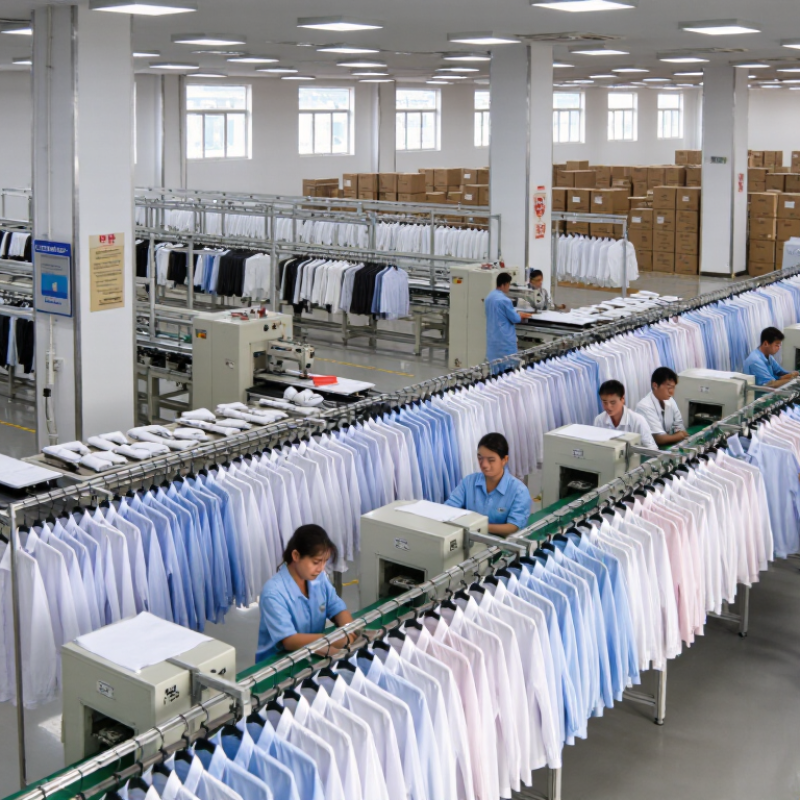
China Top Long Sleeve Shirt Suppliers for Global Buyers

Types of Long Sleeve Shirts Exported by Chinese Suppliers

Chinese suppliers export a wide range of long sleeve shirts for different climates, industries, and retail channels. Cotton jersey shirts remain popular because they feel soft and suit everyday wear. Buyers often request 160–220 GSM fabric, ribbed cuffs, and pre-shrunk treatment. Heavier versions provide warmth without becoming bulky.

Poplin and Oxford long sleeve shirts serve office, uniform, and hospitality markets. Their woven structure gives a sharper appearance than jersey. Suppliers may offer cotton, polyester, or blended fabric options. Flannel shirts are also common for autumn and winter orders. Brushed surfaces create warmth, but excessive brushing can cause pilling. This detail needs testing.

Thermal shirts usually use waffle-knit fabric or moisture-control blends. They are selected for outdoor work, travel, and cold-weather layering. Work shirts may include reinforced seams, chest pockets, reflective details, or stain-resistant finishes. Construction varies widely. A neat sample can still hide weak stitching. Buyers should check shrinkage, colorfastness, seam strength, and size tolerance before approving bulk production. I have found that clear measurement charts prevent more disputes than attractive product photos. Small mistakes remain possible, especially after repeated washing. That is why independent inspection and wash testing are practical steps for international orders.

Key Criteria for Evaluating Chinese Shirt Manufacturers

China remains a major sourcing base for long sleeve shirts. The WTO’s World Trade Statistical Review 2023 reported that China supplied about 31.7% of global clothing exports in 2022. Scale matters, but it can hide uneven factory performance.

Production evidence should come before attractive pricing. Ask for recent samples, fabric composition, shrinkage results, and sewing tolerance records. A reliable manufacturer can explain sleeve measurements, collar recovery, and wash-test failures clearly. Request a production-line video or an independent factory audit. Good photos are not enough. Check whether the facility controls cutting, stitching, finishing, and packing internally.

Quality systems deserve measurable proof. ISO 9001 certification may show process discipline, while OEKO-TEX Standard 100 testing can support textile safety claims. Verify certificate numbers and product scope. The International Trade Centre’s 2023 Trade Map data also shows China’s deep apparel export capacity, but export volume does not guarantee consistency. Compare defect rates, inspection checkpoints, and corrective-action reports. I would also review the factory’s response time during sampling. A slow reply before payment can become slower after production begins.

Cost deserves careful questioning. Request a breakdown for fabric, labor, trims, packaging, testing, and freight. Confirm minimum order quantities and realistic lead times in writing. One weakness remains easy to miss: some suppliers outsource embroidery or washing without disclosure. That gap can affect color matching and delivery dates. Build a small pilot order, record every issue, and revise the evaluation sheet before placing larger orders.

China’s Main Long Sleeve Shirt Production Regions

China’s long sleeve shirt supply base is concentrated in several connected production regions. According to China Customs data compiled by the China National Textile and Apparel Council, China’s textile and apparel exports reached about US$293.6 billion in 2023. This scale reflects mature factories, skilled labor, and established export logistics.

Zhejiang and Jiangsu offer strong knitting, dyeing, and fabric networks. Their factories often support cotton jerseys, ribbed cuffs, and lightweight seasonal shirts. Guangdong has broad experience in casualwear and flexible small-batch production. Fujian is suitable for performance-inspired shirts, with nearby synthetic fiber and garment facilities. Shandong remains important for cotton processing and textile materials, while Hubei provides useful capacity for yarn, spinning, and cotton-based products.

Regional strengths still need careful verification. A factory in Zhejiang may outsource embroidery or washing elsewhere. That shortcut fails. Buyers should inspect sample consistency, sewing density, shrinkage results, and factory audit records before placing volume orders. The International Trade Centre reports that China remains one of the world’s leading apparel exporters, but export strength does not guarantee every supplier’s reliability. In practical sourcing, a 180-gram cotton shirt should be tested after washing, not judged only by its showroom sample. Some regional comparisons also rely on broad statistical categories, so the data can hide differences between factories. A well-matched supplier should prove its capacity through transparent records, production samples, and repeatable quality checks.

Ordering Process for Global Buyers

China Top Long Sleeve Shirt Suppliers for Global Buyers

Global buyers should begin with a clear product brief. Include fabric composition, shirt weight, size chart, colors, stitching details, and target quantity. Add reference images when measurements are difficult to explain. A qualified supplier should confirm production capacity, sampling time, minimum order quantity, and available customization. Ask for recent factory photos, quality records, and relevant certifications. Do not rely on attractive quotations alone.

Request a physical sample before placing a bulk order. Check sleeve length, collar shape, seam strength, shrinkage, and color consistency after washing. Compare the sample with your approved specifications in writing. Then review the quotation, payment schedule, packaging method, delivery terms, and shipping documents. Confirm that the supplier can support your destination’s labeling and import requirements. A small detail can delay an entire shipment.

Tips: Keep every change in one written file. Use clear measurement tolerances. Set an inspection point before dispatch. Confirm carton marks early. Avoid paying for vague quantities or unfinished specifications. No process is flawless. Buyers sometimes rush approval and regret it later. A final pre-shipment check may feel repetitive, but it can reveal uneven cuffs, loose threads, or incorrect packing before the goods leave the factory.

China Top Long Sleeve Shirt Suppliers for Global Buyers - Ordering Process for Global Buyers
Order Stage Key Data Dimension Typical Industry Range or Requirement What Global Buyers Should Confirm Recommended Documentation
1. Product Brief Shirt specification Fabric composition, fabric weight, collar style, cuff design, button type, color standard, size chart, and artwork Ensure all measurements use one unit system and that tolerances are clearly stated Technical pack, measurement chart, reference images, artwork files
2. Supplier Screening Production capability Relevant experience with woven or knit long sleeve shirts, export documentation, quality-control procedures, and sample development Ask for production photos, audit records, sample references, and details of in-house or outsourced operations Supplier questionnaire, factory profile, compliance records
3. Fabric Selection Common shirt fabric options 100% cotton, cotton-polyester blends, linen blends, viscose blends, oxford cloth, poplin, twill, or flannel Confirm fiber content, fabric weight, shrinkage, colorfastness, pilling resistance, and test method Fabric swatches, specification sheet, laboratory test report
4. Sampling Sample sequence Initial development sample followed by fit, size-set, pre-production, or approval sample when required Approve construction, fit, color, trims, labels, packaging, and grading before bulk production Sample approval form, marked sample, revision log
5. Minimum Order Quantity MOQ planning Often negotiated by style, color, and fabric; lower quantities may be possible for stock fabrics or standard trims Request separate MOQs for new fabric development, custom colors, embroidery, printing, and mixed-size orders Quotation sheet, MOQ schedule, color-and-size breakdown
6. Costing Price components Garment construction, fabric, trims, decoration, labels, packaging, testing, tooling, and applicable logistics charges Confirm whether the quotation is EXW, FOB, CIF, or another agreed Incoterm and identify excluded costs Formal quotation, cost breakdown, Incoterms reference
7. Lead-Time Planning Production schedule Sampling commonly requires several weeks; bulk production is generally scheduled after material approval and deposit confirmation Separate fabric, trim, production, inspection, and shipping time; allow extra time for custom materials and peak seasons Critical-path calendar, production schedule, shipment plan
8. Purchase Order Commercial confirmation Style number, quantity by size and color, unit price, currency, delivery terms, ship window, and payment terms Make sure the purchase order matches the approved sample and technical specifications Signed purchase order, pro forma invoice, approved specification pack
9. Payment Terms Common structure A deposit before production and the balance before shipment are commonly negotiated; exact terms depend on the buyer-supplier relationship Verify bank details independently and define the payment trigger for the balance Pro forma invoice, payment schedule, bank-verification record
10. Quality Control Inspection checkpoints Incoming-material inspection, in-line inspection, final random inspection, measurement checks, appearance review, and carton verification Agree on acceptable quality limits, sampling level, defect classification, and inspection timing before production Inspection checklist, inspection report, defect photos, corrective-action record
11. Compliance Testing Market requirements Requirements vary by destination and may cover fiber labeling, flammability, restricted substances, colorfastness, and product safety Use the destination market’s current legal requirements and retailer standards rather than relying on a generic certificate Test reports, fiber-content declaration, care-label artwork, compliance statement
12. Packaging Export packing Individual polybags or paper alternatives, size stickers, carton markings, carton quantity, gross weight, and net weight Confirm packaging materials, recycling marks, carton dimensions, and labeling language required by the destination Packing list, carton artwork, packaging approval sheet
13. Shipping Transport method Ocean freight is generally used for larger planned orders; air freight is faster but usually has a higher transport cost Compare freight cost, transit time, customs responsibility, insurance, and delivery location under the selected Incoterm Commercial invoice, packing list, bill of lading or air waybill
14. Customs and Import Destination-country clearance Import classification, customs value, origin information, duties, taxes, and documentation requirements depend on the destination Confirm the appropriate HS classification and import obligations with a licensed customs professional Commercial invoice, packing list, transport document, origin document where applicable
15. Final Acceptance Post-delivery review Check carton quantity, style and color assortment, measurements, workmanship, labeling, and damage upon receipt Record shortages or defects promptly and compare received goods with the approved purchase order Goods-receipt report, discrepancy report, claims documentation

Quality Control, Certifications, and Shipping Considerations

China Top Long Sleeve Shirt Suppliers for Global Buyers should prove quality before discussing price. A strong supplier uses a written inspection plan for fabric weight, shrinkage, colorfastness, stitching, and measurements. I recommend checking pilot samples after washing, not only before production. A sleeve can measure correctly when new, then twist after laundering. That detail matters.

Independent inspections should cover cutting, sewing, finishing, packing, and random carton selection. ISO 9001 supports process management, but it does not guarantee perfect shirts. OEKO-TEX Standard 100 can support chemical safety claims, while GOTS applies to qualifying organic textile processes. Buyers should verify certificate scope, validity, facility details, and transaction documents. A certificate is not a magic shield. Textile Exchange’s 2024 Materials Market Report estimated global fiber production at 124 million tonnes in 2023, with growth toward 160 million tonnes by 2030. More volume makes traceability harder, not less important.

Shipping terms need equal attention. Confirm Incoterms, carton dimensions, gross weight, loading photos, and moisture protection in the purchase agreement. UNCTAD’s Review of Maritime Transport 2024 states that ships carry over 80% of global merchandise trade by volume. Delays, port congestion, and damaged cartons can erase a low unit price. Use a pre-shipment inspection and retain sealed reference samples. I would also request a realistic production buffer. Suppliers sometimes promise dates too confidently, and buyers sometimes accept them without questioning capacity.

China Top Long Sleeve Shirt Suppliers for Global Buyers

This chart summarizes the main evidence categories global buyers commonly review when evaluating long sleeve shirt suppliers. Certification figures represent recognized standards or documentation types, not supplier pass rates or company rankings.