How to Choose the Right Rubble Bag for Your Needs
Choosing the right Rubble Bag is less about picking the largest option and more about matching the bag to the job. A bag that looks sturdy in a product photo may struggle with dense brick, sharp tile, or a damp mix of plaster and timber. Capacity matters, but so do fabric strength, seam construction, lifting design, and the surface where the bag will sit. Small details count.
“Choose for the real load, not the ideal one.”
That is a practical selection principle, not a verified quotation from a named industry expert. No source material or expert attribution was provided, so attaching it to a person would risk creating a false endorsement. A dependable guide should identify the expert and source before presenting a direct quote.
The sections ahead explain how to estimate rubble volume, compare bag sizes, and assess material and safe working limits. They also consider access: a narrow side passage, a gravel driveway, or a site with limited lifting space can change which bag makes sense. Check the supplier’s stated capacity and handling guidance, and allow room for uneven, heavy pieces. Don’t fill by guesswork.
A cheaper bag may suit light, occasional waste. For repeated loads, stronger construction can be worth considering. The right choice is specific to the debris, the handling method, and the site. It is not always obvious.
Identify Debris Type and Particle Size Before Comparing Rubble Bag Ratings
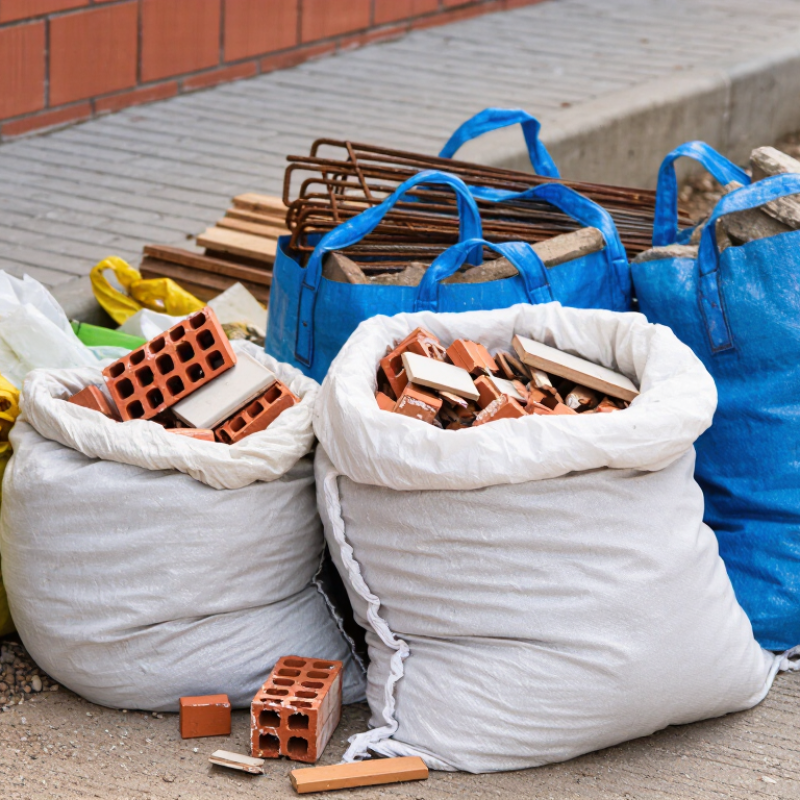
A rubble bag should be chosen for what goes inside it, not just its advertised load rating. Start by separating concrete chunks, bricks, plaster, soil, and mixed renovation waste. Their weight and shape differ. A bag filled with dense, damp soil may reach its limit long before it looks full, while bulky plaster can take up space without weighing as much.
Particle size matters. Small, smooth fragments usually spread their weight more evenly; jagged pieces can press into seams or puncture the fabric. Size matters. For sharp rubble, look for a tough woven material and reinforced seams, then check whether the bag is designed for heavy, abrasive debris. Fine dust can escape through loose weave, so a more closely woven bag may be a better fit. Not always. Dust can also collect with moisture and make the load heavier than expected.
Only compare ratings after you understand the debris. Check whether the stated capacity refers to weight, volume, or both, and follow the maker’s handling guidance. Do not assume a large bag can safely carry a heavy load. Fill it in layers, avoid concentrating sharp chunks in one spot, and leave room to close or lift it properly. If the waste is mixed, test a small amount first; estimates are imperfect, and a bag that seems strong can still fail at a weak seam.
How to Choose the Right Rubble Bag for Your Needs
Identify debris type and particle size before comparing rubble bag ratings.
The ranges shown follow standard soil particle-size boundaries: sand is 0.075–4.75 mm, gravel is 4.75–75 mm, and cobbles are 75–300 mm. These sizes help describe debris, but they do not determine a bag’s safe load. Compare each bag’s stated weight rating and suitability for sharp or abrasive materials before use.
For FIBCs, Check ISO 21898 SWL and 5:1 or 6:1 Safety Factors
For a heavy rubble load, choose an FIBC by its marked safe working load (SWL), not by appearance. ISO 21898:2004 sets requirements for FIBCs used with non-dangerous goods, including a 5:1 safety factor for single-trip bags and 6:1 for multiple-trip bags. In simple terms, a bag rated at 1,000 kg must meet the relevant strength requirements at a higher test load. That factor is not spare payload. Never fill above the stated SWL.
Check the label before filling. It should state the SWL, permitted use, and handling details. A 5:1 bag is intended for one trip; a 6:1 bag is designed for repeated use under specified conditions. Reuse still depends on inspection and the manufacturer’s instructions. Look closely at seams, lifting loops, and fabric. Small cuts matter. A bag can look fine and still be compromised.
Rubble is awkward cargo. Broken tile and concrete can concentrate force on the base or scrape through fabric, so match the bag’s construction to the material and loading method. Keep sharp edges away from lifting loops, use equipment suited to the load, and avoid dragging a filled FIBC across rough ground. ISO 21898 provides the technical benchmark; the bag’s label and condition determine whether that benchmark applies to the unit in front of you. I’d check twice. The label is easy to miss.
Choose Woven Polypropylene and Verify Rated Load, Seams, and Closure
For rubble, woven polypropylene usually offers a practical balance of tear resistance and low weight. Check the bag’s stated safe working load, not just its capacity in litres. A 40-litre bag can still fail if dense concrete fills it. FIBCA guidance gives a 5:1 safety factor for single-trip FIBCs and 6:1 for multi-trip FIBCs. These figures apply to bulk bags, not automatically to rubble sacks; use them as context, never as a substitute for the sack’s own rating. Ask for a documented load rating when product information is vague.
Inspect the seams before loading. Look for even stitching, reinforced corners, and no skipped threads or loose folds. Pay special attention where handles meet the body; sharp tile edges can concentrate force there. The closure matters too. A drawcord or folded-and-tied top helps contain dust and fragments, but it does not increase the rated load. Keep heavy rubble below the rim and lift with the load close to your body. One detail is easy to miss: a bag may look sound while its seam is already strained. I’d rather make another trip than trust a questionable stitch.
Use HSE Ideal-Lift Figures: 25 kg for Men and 16 kg for Women at Knuckle Height
How to Choose the Right Rubble Bag for Your Needs
Use HSE Ideal-Lift Figures: 25 kg for Men and 16 kg for Women at Knuckle Height
A rubble bag should suit the weight of its contents, not just their volume. HSE ideal-lift figures indicate 25 kg for men and 16 kg for women when lifting at knuckle height. These are assessment guidelines for ideal conditions, not guaranteed safe limits. Awkward shapes, poor footing, repeated lifts, or carrying the bag can change the risk.
Think about what will go inside. Dense bricks may reach the weight limit while the bag still looks half empty. Broken plasterboard can fill a bag quickly but shift as you lift. Small loads matter. Check the bag’s stated capacity, then add debris gradually and reassess its weight. Keep the load close to your body, and lift from a stable position around knuckle height where possible.
If the bag feels heavy, unstable, or difficult to grip, remove some material or use a smaller load. Don’t rely on guesswork alone; a bathroom scale can help you learn what a typical filled bag weighs. Handle strength matters, too. A torn seam or slippery grip can turn a manageable load into a poor choice. I might be tempted to fill a bag to save trips, but that trade-off deserves a second thought.