
Colourinn Industries – Textile & Dyes Auxiliaries Manufacturer & Exporter

Blog

  1. Home
  2. /
  3. Blog

What Is Polyaluminum Chloride Used For?

polyaluminum chloride is a widely used coagulant in municipal and industrial water treatment. It helps suspended particles gather into larger flocs, making them easier to remove through sedimentation or filtration. In a treatment plant, the change can be visible: cloudy water becomes clearer, while fine clay and organic color settle into compact sludge. Liquid and powdered grades are available. Their basic chemistry is similar, but performance depends on alkalinity, temperature, dosage, and raw-water quality.

Recent analysis from Grand View Research’s Polyaluminum Chloride Market report identifies municipal wastewater treatment as a major demand area. MarketsandMarkets’ Water Treatment Chemicals report also links market growth to stricter discharge standards, industrial water reuse, and expanding urban infrastructure. These reports describe strong commercial interest, but market estimates can differ considerably. Regional definitions and product classifications are not always consistent. That limitation deserves attention.

Beyond drinking-water facilities, polyaluminum chloride is used in paper manufacturing, textile wastewater treatment, mining effluent clarification, and phosphorus removal. Operators often begin with jar testing rather than relying on a standard dosage. A small dose may leave turbidity unchanged. An excessive dose may increase sludge production and complicate filtration. Residual aluminum must also be monitored under applicable drinking-water requirements, such as NSF/ANSI 60 certification and local regulations.

The practical answer is simple. Polyaluminum chloride improves separation. Its safe and efficient use requires testing, trained operators, and verified product quality. It is useful, but not a universal solution.
What Is Polyaluminum Chloride Used For?

What Is Polyaluminum Chloride?

Polyaluminum chloride, or PAC, is a pre-hydrolyzed aluminum salt used mainly as a water-treatment coagulant. Its positively charged species neutralize suspended particles, organic matter, and some phosphate compounds. These particles then join into visible flocs, which can settle or filter more easily. PAC is supplied as a liquid or powder, with performance influenced by basicity, aluminum concentration, pH, alkalinity, and water temperature.

Its uses extend beyond drinking-water treatment. Operators apply PAC in municipal wastewater plants, industrial process-water systems, paper production, and sludge conditioning. The United Nations’ 2024 SDG 6 report estimated that 2.2 billion people lacked safely managed drinking water in 2022, showing the continuing need for practical treatment chemicals.

However, PAC is not a universal solution. The U.S. Environmental Protection Agency’s Drinking Water Treatability Database recognizes aluminum-based coagulants as treatment options, but actual performance still requires jar testing and field monitoring. The chemistry is less tidy in practice. Excess dosage can increase residual aluminum, create dense sludge, or leave water chemistry unbalanced. Proper operators therefore check turbidity, pH, alkalinity, settled-water quality, and filtration results before adjusting the dose. Some water sources respond quickly; others need polymer support or different coagulation conditions.

How Polyaluminum Chloride Works in Water Treatment

What Is Polyaluminum Chloride Used For?

How Polyaluminum Chloride Works in Water Treatment

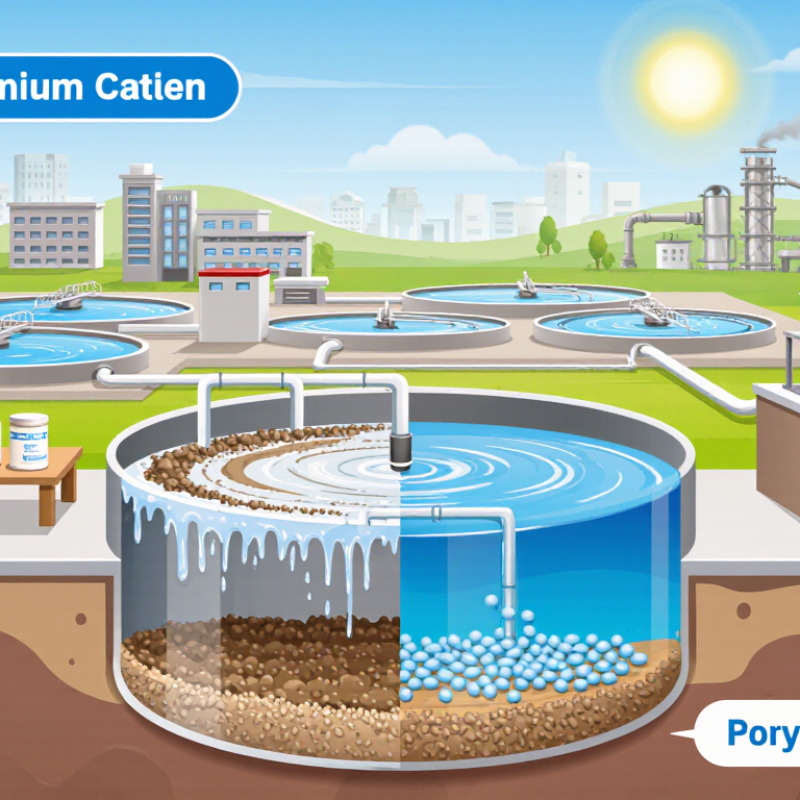
Polyaluminum chloride, or PAC, is an inorganic coagulant used in drinking water, wastewater, and industrial treatment. It helps remove suspended solids, natural color, colloids, and some organic matter. In practical treatment, PAC is mixed rapidly into raw water. Its hydrolyzed aluminum species reduce particle charges, allowing tiny particles to collide and form visible flocs. Gentle mixing then strengthens these flocs before sedimentation or filtration. The water changes quickly. Cloudy particles gather like soft, brown snow.

PAC performance depends on pH, alkalinity, temperature, and raw-water chemistry. A higher dose is not always better. Excessive dosing may leave residual aluminum, increase sludge production, or weaken flocs. Operators should use jar testing, turbidity checks, and routine residual monitoring before adjusting a full-scale system. One clear jar does not prove long-term success. That is an easy mistake to make.

Tips: Start with several small dose levels, not one guess. Record pH, mixing time, settling speed, and final turbidity. Check results during rainy periods because runoff can change water chemistry sharply. PAC may support phosphorus reduction in some wastewater systems, but results vary. Confirm performance with site-specific testing and qualified treatment professionals.

Main Applications of Polyaluminum Chloride

Polyaluminum chloride is mainly used as a coagulant in water and wastewater treatment. It destabilizes suspended particles, allowing them to form larger flocs. These flocs settle faster or become easier to filter. In drinking-water plants, operators use PAC to reduce turbidity, natural organic matter, and some color. The WHO/UNICEF Joint Monitoring Programme reported that 2.2 billion people lacked safely managed drinking water in 2022. Reliable clarification remains essential.

PAC also supports municipal wastewater treatment. It can remove phosphorus, fine solids, and part of the organic load before biological treatment or discharge. Industrial facilities use it for process water, textile wastewater, paper production, and surface-treatment effluent. Actual performance depends on pH, temperature, alkalinity, and particle type. There is no universal dosage. Jar testing is still necessary.

A useful detail is sludge production. Stronger clarification may create more dewaterable solids, but excessive dosing can increase sludge volume and chemical costs. Residual aluminum also requires attention. The U.S. Environmental Protection Agency lists an aluminum secondary standard range of 0.05–0.2 mg/L. Operators should therefore monitor treated water, not only visual clarity. PAC is effective, but it is not magic. Field results can differ from laboratory expectations. This is where routine sampling and experienced adjustment matter.

Benefits and Limitations of Its Use

What Is Polyaluminum Chloride Used For?

Benefits and Limitations of Its Use

Polyaluminum chloride, or PAC, is mainly used as a coagulant in drinking-water and wastewater treatment. It helps destabilize fine particles, organic matter, and some microorganisms. These contaminants then form larger flocs that settle or filter more easily. In a treatment plant, operators may see clearer water within minutes after correct dosing.

The benefits are practical. PAC often works across a broader pH range than traditional aluminum salts. It can also reduce the amount of added alkalinity in some raw waters. The World Health Organization recommends keeping drinking-water turbidity below 1 NTU before disinfection, where feasible. Effective coagulation supports that target, although PAC alone cannot guarantee it. Results depend on temperature, alkalinity, organic content, and mixing conditions.

Limitations deserve equal attention. Overdosing may leave dissolved aluminum, increase sludge production, or complicate filtration. The United States Environmental Protection Agency’s 2023 Drinking Water Infrastructure Needs Survey estimated $625 billion in drinking-water investment needs over 20 years. That figure highlights why chemical efficiency matters, but it does not make PAC universally economical. Transport, storage, sludge disposal, and local water chemistry can change the cost substantially. Jar testing remains essential. Real plant conditions are messier than laboratory results. Operators should verify residual aluminum, turbidity, pH, and sludge behavior rather than trusting a fixed dose.

Safe Handling and Environmental Considerations

Polyaluminum chloride is widely used as a coagulant in drinking water and wastewater treatment. It helps suspended particles join into larger flocs, which settle or filter more easily. Operators may use it in municipal plants, industrial facilities, and some paper-processing systems. The correct dose depends on water chemistry, turbidity, temperature, and alkalinity. Jar testing is more reliable than guessing.

Safe handling starts with the safety data sheet and site procedures. Some formulations can irritate or burn skin and eyes. Wear chemical-resistant gloves, protective clothing, and suitable eye protection. Use ventilation when transferring the liquid or powder. Keep eyewash stations accessible. Store containers securely, away from incompatible materials and extreme heat. A small spill can create a slippery, acidic surface.

Environmental control requires equal attention. Do not discharge concentrated product into drains, soil, or surface water. Spilled material should be contained and collected according to local waste requirements. Treatment sludge may contain concentrated contaminants and needs proper assessment before disposal or reuse. Routine monitoring should include pH, turbidity, residual aluminum, and receiving-water conditions. Field experience shows that overdosing can increase sludge and chemical costs without improving clarity. That mistake is easy to make. Testing records should be reviewed after seasonal changes, equipment adjustments, or unusual raw-water conditions. The process is not always perfect, and operators should question results that look unusually good.

What Is Polyaluminum Chloride Used For? - Safe Handling and Environmental Considerations

Application Area Primary Function Typical Treatment Target Operational Considerations Safety and Environmental Notes
Drinking-water treatment Coagulation and flocculation Suspended solids, colloids, natural organic matter, and turbidity Dose is selected through jar testing and adjusted for raw-water quality, temperature, alkalinity, and pH. Use only grades approved for the intended water application. Control residual aluminum according to applicable drinking-water requirements.
Municipal wastewater Particle destabilization and solids removal Turbidity, suspended solids, phosphorus, and some organic contaminants May be applied before clarification, filtration, or tertiary phosphorus removal; process testing is required to optimize dose and sludge production. Treatment can increase chemical sludge volume. Sludge should be characterized and managed under local waste regulations.
Industrial process water Clarification and reduction of suspended material Process solids, emulsified matter, color, and turbidity Compatibility with other treatment chemicals and downstream equipment should be confirmed before full-scale use. Prevent concentrated product from entering drains or natural waterways. Collect spills using suitable inert absorbent material.
Paper and pulp processing Retention, drainage, and removal of fine particles Fibers, fillers, suspended solids, and process color Performance depends on furnish composition, pH, mixing conditions, and interaction with retention aids. Wastewater and sludge management should account for added aluminum-containing solids and altered pH.
Textile and dyeing wastewater Coagulation of color and suspended matter Dyes, color bodies, colloids, and suspended solids Removal efficiency varies significantly with dye chemistry, pH, salinity, and pretreatment conditions. Do not assume coagulation removes all dissolved contaminants. Confirm treated-water quality with laboratory analysis.
Stormwater and surface-water clarification Rapid floc formation and particle settling Fine sediment, turbidity, and particle-bound pollutants Flow rate, mixing energy, contact time, and sediment removal capacity affect performance. Avoid overdosing, which may increase residual dissolved aluminum and alter receiving-water chemistry.
Physical form Liquid or solid coagulant supply Product handling and dosing requirements Liquid products require compatible tanks and pumps; solid products require controlled dissolution and dust management. Consult the product safety data sheet for concentration-specific hazards, storage limits, and personal protective equipment.
Chemical handling Safe transfer, storage, and dosing Worker exposure prevention and reliable process control Use closed transfer where practical, provide ventilation, label containers, and keep incompatible materials separate. Wear chemical-resistant gloves, protective eyewear, protective clothing, and suitable footwear. Avoid contact with skin and eyes.
Spill response Containment and controlled cleanup Prevention of drain, soil, and waterway contamination Stop the release if safe, isolate the area, contain the material, and follow the facility emergency plan. Do not wash large spills into drains. Dispose of cleanup materials in accordance with local requirements and the safety data sheet.
Environmental control Optimization of treatment benefits and impacts Low residual aluminum, acceptable pH, and manageable sludge Use jar tests, monitor pH and turbidity, verify residual aluminum where relevant, and inspect clarifier performance. The chemical itself is not a substitute for complete treatment. Discharge limits, sludge rules, and aquatic-life protections must be observed.

Note: Actual dosage, pH conditions, storage requirements, and protective measures depend on the product formulation and site conditions. Always follow the applicable safety data sheet, operating procedures, and local regulations.