
How to Choose the Best Thermochromic Powder Supplier
Choosing the right Thermochromic Powder supplier can determine whether a product performs reliably or disappoints customers. Temperature-sensitive pigments may look similar in samples, yet behave differently during printing, molding, or coating. A dependable supplier should explain activation temperatures, reversible or irreversible color changes, particle size, light stability, and recommended applications. Clear technical data matters more than attractive marketing language.
Ask for a current technical data sheet, safety data sheet, certificate of analysis, and traceable batch information. Request samples from the same production batch intended for your order. Test them under realistic conditions, including heat exposure, cooling cycles, friction, moisture, and the actual binder or plastic system. Small differences can become obvious on a printed label or molded part. They matter.
Experience also reveals practical details. Check whether the supplier offers consistent packaging, responsive technical support, manageable minimum order quantities, and dependable delivery records. A capable partner should discuss storage conditions and explain how pigment performance may change over time. Independent laboratory testing can strengthen your decision, especially for high-volume production or products used near consumers. However, no supplier is perfect. A polished sample may hide process limitations, and my first supplier assumptions have sometimes failed after scale-up. Leave room for verification. Compare evidence, not promises. Review applicable product, workplace, labeling, and environmental requirements in your market. The best choice balances color performance, batch consistency, documentation, communication, and total cost. Reliability is demonstrated through repeatable results, not a single successful trial.
Map Activation Temperatures Across the 15–70°C Thermochromic Range
How to Choose the Best Thermochromic Powder Supplier
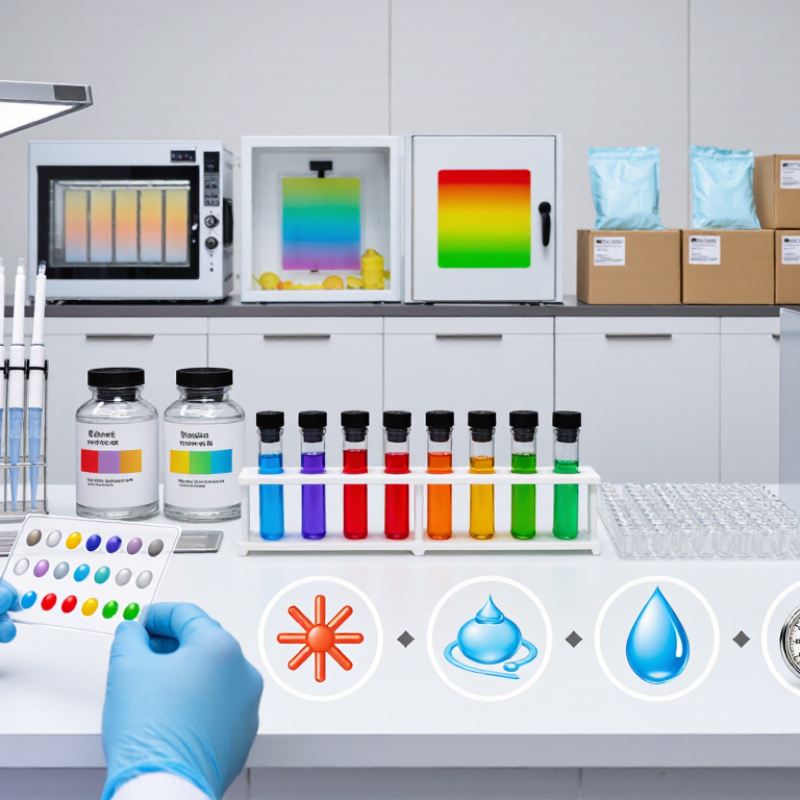
Activation temperature should guide supplier selection. Map the full 15–70°C range before comparing prices. Test practical points at 15, 22, 31, 37, 45, 55, 65, and 70°C. Record the first visible color change, full color shift, and recovery temperature. These values rarely match perfectly. A 2024 Grand View Research market assessment projects thermochromic pigments to grow at approximately 7.8% annually through 2030. That growth increases supplier choice, but it also makes technical verification more important.
Ask for activation tolerances, color-change curves, particle size, and storage conditions. Request test data from differential scanning calorimetry when available. Then verify the powder in your own substrate. A laboratory oven, calibrated thermometer, and colorimeter can reveal differences hidden by a simple visual test. Use at least three heating and cooling cycles. Measure after five-minute holds at each temperature. ASTM E1164 provides a recognized approach for instrumental color measurement, supporting more consistent comparisons.
Do not trust one attractive sample. I once judged a powder too quickly because its 31°C response looked strong. After repeated cycling, the color recovery became incomplete. That failure changed my supplier checklist. Compare batch consistency, not only the first sample. Check whether the supplier reports activation as onset, midpoint, or completion. Those definitions can shift the apparent temperature by several degrees. A reliable supplier should explain the method clearly and provide traceable batch records.
| Nominal Activation Temperature | Typical Reversible Transition | Approximate Reverse-Transition Behavior | Common Application Fit | Supplier Data to Request |
|---|---|---|---|---|
| 15°C | Colored below the activation point and lighter or colorless above it, depending on the pigment system. | Often returns during cooling several degrees below the activation point; the exact hysteresis depends on formulation and test conditions. | Cold-chain indicators, refrigerated packaging, beverage temperature cues, and low-temperature novelty printing. | Activation tolerance, storage temperature limits, humidity resistance, and performance after repeated cooling and heating cycles. |
| 20°C | Visible color change near normal indoor or ambient conditions. | May return to the original state after cooling below the nominal transition temperature. | Room-temperature indicators, promotional graphics, educational products, and interactive packaging. | Measured transition curve, color strength at 20°C and 25°C, lightfastness data, and recommended ink or coating system. |
| 25°C | Color changes close to standard laboratory and indoor reference temperature. | Typically shows a lower return temperature than the activation temperature because of thermal hysteresis. | Ambient-temperature labels, security graphics, consumer packaging, and decorative coatings. | Test method, activation tolerance, reversibility, particle-size distribution, and compatibility with the intended binder. |
| 31°C | Color transition around skin or warm-surface temperature. | Usually reverses when the surface cools below the transition zone. | Touch-sensitive prints, novelty items, personal-care packaging, and heat-responsive educational materials. | Surface-temperature test results, rub resistance, skin-contact suitability where relevant, and cycle-life data. |
| 33°C | Color shift near the upper range of normal skin temperature. | Cooling commonly restores the starting color after the substrate falls below the return threshold. | Hand-activated graphics, tamper-evident concepts, interactive labels, and temperature-demonstration products. | Activation midpoint, color contrast, response time, abrasion resistance, and recommended film or coating thickness. |
| 37°C | Color change near body temperature; the visual response depends on the selected color system. | Reversal normally occurs after cooling below the nominal activation range. | Body-temperature demonstrations, medical-training materials, wearable concepts, and heat-sensitive indicators. | Temperature accuracy, repeatability, biocompatibility documentation when applicable, and sterilization limitations. |
| 40°C | Transition becomes visible on warm surfaces and in mildly heated products. | Return performance depends on heat exposure time, substrate thermal mass, and pigment formulation. | Warm-food packaging, appliance indicators, heat-sensitive promotional graphics, and process-monitoring labels. | Maximum continuous-use temperature, short-term peak-temperature resistance, and adhesion after thermal cycling. |
| 45°C | Color changes when the substrate reaches a distinctly warm but non-industrial temperature. | Repeated reversibility should be verified because prolonged heat can reduce color intensity over time. | Hot-beverage indicators, cookware warnings, warm-surface labels, and consumer safety graphics. | Heat-aging results, color-difference measurements, substrate compatibility, and resistance to moisture and chemicals. |
| 50°C | Transition is suitable for moderately heated surfaces and products. | Cooling may restore the original state gradually rather than instantly, especially on thick substrates. | Packaging for heated goods, equipment-status labels, thermal demonstrations, and decorative heat-response coatings. | Response time at a defined film thickness, recommended processing temperature, and long-term storage stability. |
| 55°C | Visible change occurs in the higher warm-temperature range. | Reverse transition should be checked after both brief heating and extended exposure. | Hot-surface warnings, industrial demonstration graphics, temperature-check labels, and process indicators. | Thermal endurance, batch-to-batch activation consistency, safety data, and compatibility with production equipment. |
| 60°C | Color transition is triggered by a hot surface or heated product. | Repeated cycling may produce slower recovery or reduced contrast if the pigment is exposed beyond its rated limit. | Heat-warning labels, sterilization-process indicators, equipment monitoring, and high-temperature packaging concepts. | Continuous and peak exposure limits, cycle-life results, color retention after aging, and recommended encapsulation protection. |
| 65°C | High-temperature visual response for applications requiring a stronger heat threshold. | Recovery behavior is formulation-specific and should be measured under the actual substrate and heating profile. | Industrial warning graphics, heated-process indicators, appliance testing, and laboratory demonstration products. | Thermal decomposition limits, activation tolerance, safety documentation, and independent laboratory test results. |
| 70°C | Transition occurs near the upper end of commonly used reversible thermochromic powder ranges. | Suppliers should confirm whether the system is fully reversible after repeated exposure at 70°C. | High-temperature warning labels, process-control graphics, equipment testing, and specialized industrial applications. | Maximum service temperature, irreversible color-loss data, thermal-aging results, and verified activation curves. |