
Colourinn Industries – Textile & Dyes Auxiliaries Manufacturer & Exporter

Blog

  1. Home
  2. /
  3. Blog

7 Best Silver Silk Pillowcase Suppliers for Global Buyers

Silver Silk Pillowcases sit at the intersection of luxury bedding, textile innovation, and practical sourcing. For global buyers, the silver finish is only one part of the decision. Fiber quality, silk weight, seam construction, color consistency, and clear care instructions all affect how a pillowcase performs after repeated washing. Small details matter: a smooth zipper, an even silver tone, and a fabric label that identifies the silk grade can separate a reliable sample from an attractive photograph.

The scale of the textile market makes careful sourcing essential. Textile Exchange’s Materials Market Report 2024 estimates that global fiber production reached 124 million tonnes in 2023. Silk represents only a small share of that total, so buyers should ask suppliers for specific, verifiable product information rather than rely on broad claims. For silver-treated textiles, request details about the treatment method, durability testing, and supporting documentation. A polished sample is not proof of consistent bulk production.

As sustainability advocate Orsola de Castro has said, “The most sustainable garment is the one already in your wardrobe.” Her point is a useful reminder for bedding buyers: longevity matters. This guide compares seven Silver Silk Pillowcase suppliers on product transparency, customization, quality controls, and export readiness. Not every supplier will suit every market. That is worth remembering. The best choice is the one whose samples, documentation, and production standards hold up beyond the first inspection.
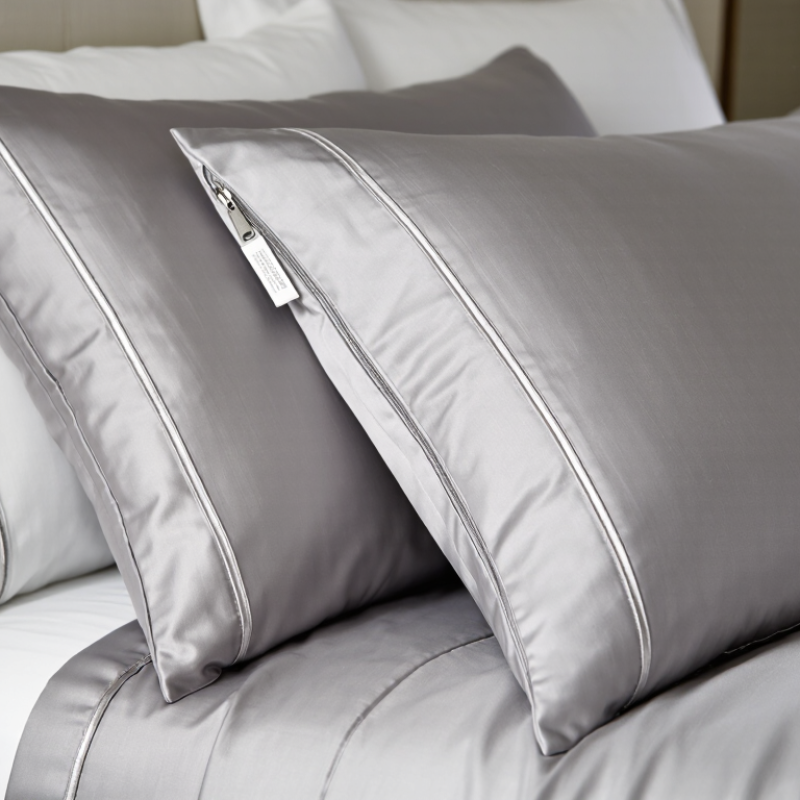
7 Best Silver Silk Pillowcase Suppliers for Global Buyers

Silver Silk Pillowcase Basics: 22 Momme ≈95.5 g/m²; 1 Momme = 4.34 g/m²

For a silver silk pillowcase, “silver” usually describes the fabric’s color, not silver content. Check the fiber composition and fabric weight separately. Momme measures silk fabric weight by area: using the standard conversion, 1 momme equals 4.34 g/m². A 22-momme fabric therefore weighs about 95.5 g/m². That figure describes the cloth, not the finished pillowcase, which also depends on its dimensions and seam allowance. Small distinction. It matters when comparing supplier quotations.

Textile Exchange’s Materials Market Report 2024 estimates that global fiber production reached 124 million tonnes in 2023. That broad figure does not assess silk quality, but it underlines why buyers need material-specific specifications. Ask suppliers to state momme, fiber composition, weave, and whether the weight is measured before or after finishing. Request a recent test report or sample, then check the hand feel and opacity under daylight. A 22-momme label is useful, not a guarantee. I would also confirm measurement tolerances; a missing tolerance can make two “22-momme” offers harder to compare than expected.

Supplier Screening: ISO 13934-1 Tensile Testing and OEKO-TEX® Checks

For silver silk pillowcases, supplier screening should begin with test records, not polished product photos. Ask for ISO 13934-1 tensile reports covering the actual shell fabric and finished construction. This method measures maximum force and elongation using a strip specimen. Check warp and weft results, sample conditioning, test date, and laboratory identification. Small details matter.

A report for a similar silk blend may not represent the silver-colored fabric you will buy. Request the fabric composition, momme weight, dye details, and report-to-product traceability in writing. Compare batches when possible, since finishing can affect strength and hand feel. Still, tensile numbers cannot predict every seam failure or nightly wear pattern. That gap matters.

For chemical screening, review a current OEKO-TEX® certificate and confirm its scope includes the relevant textile article. Check the product class, certificate number, expiry, and whether listed materials match the pillowcase components. A valid check supports confidence about tested harmful substances; it does not prove durability or environmental performance. Keep copies with purchase records and request updated documentation after major material changes. No paperwork is perfect.

Seven Supplier Profiles: Silk Grades, Customization, MOQs, and Export Markets

Textile Exchange’s Materials Market Report 2024 estimates global fiber production reached 124 million tonnes in 2023. That figure covers all fibers, not silk alone, but it highlights why buyers should request clear material documentation. The profiles below are sourcing options, not endorsements. Check certificates, test reports, and production samples before placing an order.

A Chinese mulberry-silk specialist may offer 19- or 22-momme charmeuse, custom colors, and indicative MOQs of 50–100 pieces. A larger mill-linked exporter may provide 22- or 25-momme fabric, private-label packaging, and MOQs above 300. A small workshop can accommodate unusual dimensions and embroidered edges, often with higher unit costs. An export-focused factory may offer standard sizes, neutral packaging, and established shipping routes to North America and Europe. Ask how it verifies silk composition.

An India-based supplier may combine silk shells with locally made packaging, while a Turkish home-textile exporter may focus on finishing and regional distribution. A trading company can consolidate colors and sizes, but buyers should confirm who controls fabric quality. Some listings use “6A” grading, yet labels are not universally comparable. Request the test method. MOQs vary by color, size, and packaging, so treat quoted ranges as provisional. A 100-piece MOQ may rise sharply for custom dyeing or printed cartons. These details matter.

7 Best Silver Silk Pillowcase Suppliers for Global Buyers — Seven Supplier Profiles: Silk Grades, Customization, MOQs, and Export Markets

Buyer’s comparison framework, not a directory of verified companies. The profiles below describe common supplier archetypes; MOQ and customization details are indicative market ranges, not confirmed offers. Verify specifications, certifications, production capacity, and destination-market experience directly with each supplier.

Supplier Profile Silk and Construction Customization Options Indicative MOQ Common Export Destinations Buyer Checks
1. Premium silk specialist Typically 100% mulberry silk; often offered in 19–25 momme. Request the exact grade, weave, and finished-weight specification. Color matching, hidden zipper or envelope closure, piping, labels, and gift packaging may be available. Often 50–300 pieces per color or design; confirm whether sampling is separate. North America, Europe, Australia, and East Asia are common destination regions for silk home-textile trade. Obtain a pre-production sample and confirm fiber content through a suitable test report.
2. Large-scale home-textile manufacturer May offer silk alongside other bedding materials; specifications and available momme weights vary by production line. Private labels, standard-size ranges, packaging, and repeat-order color programs are typical capabilities to ask about. Often 200–1,000 pieces per style, depending on fabric and packaging requirements. Commonly serves established retail and wholesale markets in Europe and North America; verify actual shipment history. Check whether silk production is in-house or subcontracted and audit quality controls.
3. Flexible private-label workshop Usually focuses on a narrower product range; verify that the pillowcase is pure silk rather than a silk blend. May accommodate small label runs, custom dimensions, simple embroidery, and low-volume packaging changes. Potentially 30–150 pieces per design; lower quantities can involve higher unit costs. Online sellers and boutique buyers commonly target North America, the UK, and Australia. Confirm the MOQ applies to the requested fabric, color, size, and branding combination.
4. Fabric-mill-linked supplier May provide broader fabric choices, including different momme weights and weave options; availability depends on mill stock. Custom fabric selection, dye lots, dimensions, and coordinated bedding items may be possible. Often 100–500 pieces per color; custom-dyed fabric may require a larger fabric commitment. Export destinations vary; Europe, North America, and regional Asian markets are common silk-textile trading routes. Ask for the fabric mill, lot consistency controls, and written confirmation of momme and composition.
5. Design-led boutique producer Often positions products in the premium segment; look for clearly specified 100% mulberry silk and construction details. Distinctive colors, contrast piping, embroidered details, branded inserts, and presentation packaging may be offered. Often 50–250 pieces per design, subject to trim and packaging availability. Boutique retail and direct-to-consumer channels commonly target Europe, North America, and Australia. Approve color standards and packaging samples before bulk production.
6. Compliance-oriented exporter Silk specifications should be assessed product by product; certifications and test reports apply only within their stated scope. Custom care labels, fiber-content labels, carton marks, and market-specific documentation may be supported. Often 200–1,000 pieces per SKU; requirements depend on testing, packaging, and order configuration. May serve regulated retail channels in the EU, UK, US, or other markets; confirm country-specific experience. Validate certificate holder, product scope, issuing body, and current validity independently.
7. Sourcing and trading partner May source from multiple factories; silk grade, momme, and workmanship can differ between production partners. Can sometimes consolidate styles, arrange product development, and coordinate export documentation. May accept 100–500 pieces per style; confirm factory-level minimums and any service charges. Destination markets depend on the partner network; request recent, verifiable references for the target country. Identify the actual manufacturer and agree who is responsible for inspection, defects, and reorders.

Note: Momme is a measure of silk fabric weight, not a silk-grade certification. Terms such as “6A” are not, by themselves, a substitute for independently verifiable fiber-content, construction, and quality documentation.

Compare Suppliers by Price, Lead Time, Certifications, and Order Terms

7 Best Silver Silk Pillowcase Suppliers for Global Buyers

Compare Suppliers by Price, Lead Time, Certifications, and Order Terms

A useful supplier comparison starts with a like-for-like quotation. Ask for the silk grade, momme weight, dimensions, closure type, packaging, and price at several order quantities. A lower unit price may exclude sampling, custom labels, or freight. Check those costs before comparing offers.

Small details matter. Request separate estimates for sample approval, production, and shipping; a single lead-time figure can hide delays between stages. Confirm minimum order quantity, payment schedule, defect policy, and agreed delivery terms in writing.

Certifications need the same scrutiny as pricing. Ask which facility and product each certificate covers, then verify validity with the issuing organization.

According to Textile Exchange’s 2024 Materials Market Report, global fiber production reached 124 million tonnes in 2023. This figure covers many fiber types, not silk alone, but it shows why specific material and traceability claims deserve careful checks.

Request documents identifying the silk’s composition and origin, and clarify whether testing applies to the finished pillowcase or only its fabric. One comparison sheet helps. Still, no spreadsheet can replace a sample: feel the surface, inspect stitching, and wash-test it before committing to a large order.

Global Sourcing Risks: Colorfastness, Packaging, Compliance, and Shipping

A silver silk pillowcase may photograph evenly, yet slight dye variation can appear under daylight. Global buyers should ask suppliers for lot-based color records and the dyeing method. Rub a white cloth over dry and lightly damp fabric, then inspect for color transfer. Repeat after washing, because a showroom swatch is not a production guarantee. Small details matter.

Packaging should protect the fabric from moisture, dust, and abrasion during transit. Specify the individual sleeve, carton strength, and moisture barrier, then approve a packed sample. Avoid assuming that plastic-free, recyclable, or protective claims mean the same thing everywhere. Request fiber-content and care-label documents, plus relevant test reports for the destination market. Requirements vary by market and product. Confirm current obligations with your importer or a qualified compliance adviser.

Before booking, align inspection timing, carton dimensions, and shipping terms in writing. Compare carton sizes and gross weights with booking data; small errors can trigger delays. Ask for tracking milestones, contingency lead time, and a clear process for damaged cartons. Samples can deceive. A pre-shipment check should compare bulk goods with the approved shade, stitching, and packaging. No checklist removes every risk, but written tolerances make disagreements easier to resolve.