Blog
- Home
- /
- Blog
China Best ISTA Package Testing Equipment Suppliers?
Choosing China’s best ISTA package testing equipment suppliers takes more than comparing prices or product photos. A useful supplier should explain how its systems reproduce real distribution hazards, from a compression load on a carton to repeated vibration across a test table. Buyers should examine calibration records, control-system functions, safety features, installation support, and access to replacement parts. Small details matter. A clear test report can save days of uncertainty.
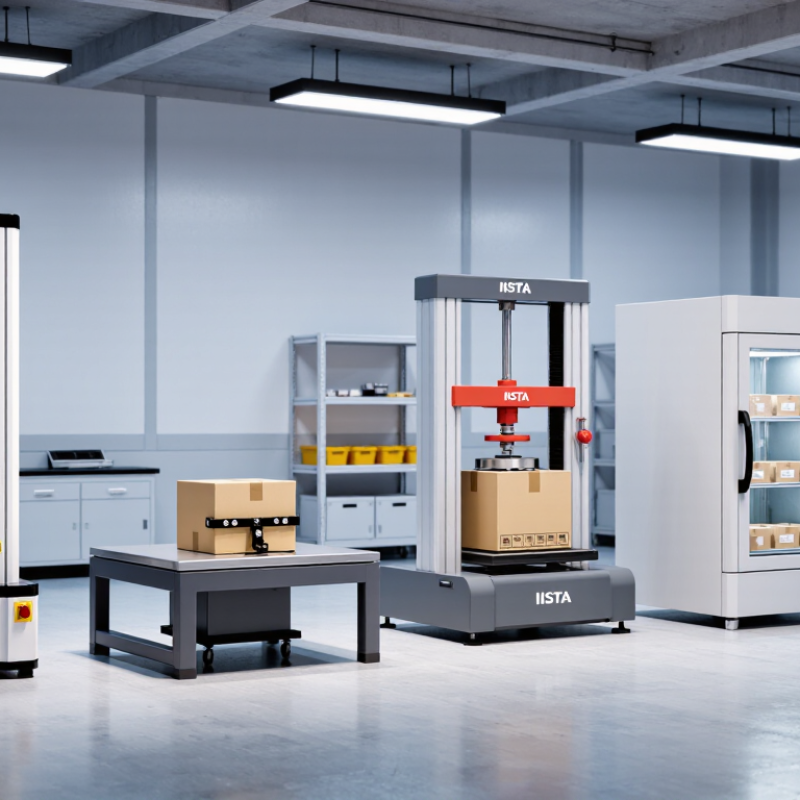
ISTA Series Test Equipment for Packages Test may include drop testers, vibration testers, compression machines, and climate chambers. The right combination depends on package size, product fragility, shipping routes, and the test protocols required by the buyer. A polished demonstration is helpful, but it cannot replace documented performance and responsive technical support. Ask suppliers how they verify results, train operators, and handle service after installation. Then compare answers, not just specifications.
One point needs care: no source material was provided to verify an industry expert’s identity or quotation. Inventing one would weaken this guide’s credibility. A suitable verified expert comment could clarify why realistic test conditions matter, but it should be added only with a reliable source. This comparison can still help readers build a practical shortlist—and spot gaps worth investigating.
Understanding ISTA Standards and Their Role in Package Testing
ISTA standards provide structured procedures for evaluating how packaged products withstand distribution hazards. Depending on the selected procedure, tests may include vibration, compression, drops, or temperature and humidity conditioning. The sequence matters. A package tested with the wrong profile may pass in the lab but fail during shipment. That matters.
For buyers comparing testing equipment suppliers in China, the key question is whether the equipment can reproduce the conditions required by the relevant ISTA procedure. Ask about vibration range, drop height control, compression capacity, and calibration records. Request a demonstration using a package similar in size and weight to yours. Practical details count: a loose fixture or uneven table can distort results. Supplier support also matters, especially when staff need help setting up a repeatable test or interpreting data. A polished brochure is not enough. I have seen teams focus on machine specifications and overlook how packages are secured; it is an easy mistake, and worth reviewing. ISTA compliance is not a label attached to any single machine. It depends on selecting the right procedure, equipment, setup, and documentation for the product’s distribution risks.
ISTA Procedures 1A, 2A, and 3A apply to packaged products weighing up to 150 lb (approximately 68 kg). Procedure 3A is designed for individual packages shipped through a parcel delivery system and evaluates distribution hazards using tests such as vibration and shock. Choose a procedure based on the shipment and package characteristics; verify requirements in the current ISTA procedure.
Types of ISTA Package Testing Equipment and Their Applications
ISTA package testing equipment helps teams examine how cartons, cushioning, and enclosed products respond to transport hazards. A vibration tester recreates repeated movement on a truck or conveyor. It can reveal loose components, scuffing, or cushioning that shifts during shipment. Drop testers assess damage from handling impacts, such as a carton falling from a loading height. Small details matter. The package’s weight, orientation, and closure method can change the result.
Compression testers apply a controlled load to stacked cartons. They are useful for checking whether lower packages may buckle in storage or transit. Incline impact testers simulate horizontal jolts, while shock testers measure sudden acceleration on a packaged product. Environmental chambers add heat, cold, or humidity before mechanical tests. This matters when packaging moves through changing climates. Fit matters. Samples should reflect real production, not a carefully improved prototype.
Choose equipment according to the distribution route and the failure being investigated. A vibration test alone may miss weaknesses caused by stacking or drops. Test sequences also vary by procedure and shipment type, so confirm the current protocol before setting levels. Results are more useful when teams record product condition, package dimensions, and failure locations. One limitation is easy to overlook: a lab test cannot capture every handling variation in the field.
Key Criteria for Evaluating Chinese Equipment Suppliers
When comparing Chinese ISTA package testing equipment suppliers, examine how precisely each system reproduces the required test sequence. Ask for calibration certificates, sensor accuracy, usable chamber dimensions, and software records that retain test settings and results. A drop tester should control height and release reliably; a vibration table should document frequency and displacement. Request a live demonstration using a package close to your own product’s size and weight. Numbers matter.
Shipping conditions vary, so equipment must match the intended ISTA procedure rather than simply look robust. Pitney Bowes’ 2023 Parcel Shipping Index reported 21.7 billion U.S. parcels in 2022, showing the scale of parcel distribution that packaging may encounter. This figure does not predict a specific product’s risks, but it supports checking whether a supplier can configure repeatable tests for your actual route and package. Ask how factory acceptance testing is documented, and whether installation support includes operator training and a clear service-parts plan.
Compare suppliers using the same written acceptance criteria. Check calibration traceability, safety interlocks, software updates, spare-part lead times, and response times for technical support. Request sample reports from completed tests, not just promotional specifications. A polished brochure is not proof. Some details may still be missed during a remote review; an onsite inspection can reveal awkward controls, loose fixtures, or unclear maintenance access. Ask the supplier to record these issues and agree on corrective actions before shipment.
How to Compare Supplier Capabilities, Certifications, and Services
China Best ISTA Package Testing Equipment Suppliers? How to Compare Supplier Capabilities, Certifications, and Services
A supplier’s catalogue rarely tells the whole story. Compare vibration-table frequency range, drop-test height, compression capacity, and chamber temperature and humidity limits against your actual package specifications. UNCTAD’s Review of Maritime Transport 2023 reported that global maritime trade contracted 0.4% in 2022, with a 2.4% rebound projected for 2023. Changing transport conditions make flexible, repeatable test setups valuable. Ask suppliers to demonstrate a complete test with your package dimensions and load. Numbers help.
Check certification claims carefully. Equipment that supports an ISTA procedure is not the same as a certified testing laboratory. Request calibration records, traceability details, and the scope of any ISO/IEC 17025 accreditation. The World Bank’s 2023 Logistics Performance Index assessed 139 economies across six areas, including infrastructure, tracking, and timeliness. That variability is a reason to match test conditions to the distribution route, not just buy a machine with a familiar label. Ask for a sample test report and raw data. Ask to observe.
Service matters after installation. Compare commissioning, operator training, software updates, spare-part availability, and documented response times. A climate chamber may meet its stated range yet struggle to maintain uniform conditions under a full load; ask how uniformity is verified. I would also check how quickly the supplier can diagnose a failed sensor. A polished quotation is not proof. Record each supplier’s measured performance, calibration interval, and support commitments in the same comparison sheet.
| Comparison Dimension | What to Compare | Relevant Standards or Facts | Evidence to Request | Buyer Check |
|---|---|---|---|---|
| Test procedure coverage | Confirm which procedures the equipment can support, including the required test sequence, load, and operating range. Match the configuration to the product’s distribution risks. | ISTA publishes packaged-product test procedures, including procedures in its 1, 2, and 3 series. The applicable procedure depends on the product and distribution environment. | Equipment configuration list, supported procedure list, operating limits, and a sample test plan mapped to the required procedure. | Ask the supplier to identify any steps that require separate equipment or manual operation. |
| Drop and impact testing | Compare drop-height range, payload capacity, test surface, release method, and whether orientations can be set consistently. | ISTA procedures may include drop or impact tests. ASTM D5276 covers free-fall drop testing of loaded containers. | Rated load and height specifications, release-system details, measurement method, and commissioning test results. | Check that the quoted range covers the package dimensions, mass, and test conditions in your chosen procedure. |
| Vibration testing | Compare payload capacity, frequency range, displacement or acceleration limits, control modes, and fixture design. | ISTA distribution procedures may include vibration testing. ASTM D999 addresses vibration testing of shipping containers. | Technical datasheet, controller specifications, calibration records, fixture drawings, and a demonstration using a representative load. | Verify that the complete system—not only the vibration table—meets the required test profile and load. |
| Conditioning capability | Check whether temperature and humidity conditioning is required, and whether the supplier offers a compatible chamber or a documented external-conditioning workflow. | ISTA procedures can specify atmospheric conditioning. ASTM D4332 describes conditioning containers, packages, or packaging components for testing. | Chamber working volume, temperature and humidity ranges, uniformity data, sensor details, and calibration documentation, if a chamber is supplied. | Confirm chamber capacity for the largest package and the required conditioning conditions and duration. |
| Controls and test records | Compare recipe setup, safety interlocks, user access, data export, alarms, and the ability to retain test parameters and results. | Software features and data formats are product-specific; they should be assessed against your laboratory’s recordkeeping and reporting needs. | Software demonstration, sample report, export-format list, user manual, and backup or data-retention description. | Check that reports identify the test setup, settings, date, equipment, and relevant results. |
| Calibration and measurement | Determine which sensors and measurement channels are included, how they are calibrated, and whether calibration is traceable to recognized standards. | ISO/IEC 17025 specifies requirements for the competence of testing and calibration laboratories; it is not an equipment product certification. | Calibration certificates for supplied measurement devices, calibration intervals, and details of the laboratory that performed calibration. | If accredited calibration is required, verify the laboratory’s accreditation scope covers the relevant measurement. |
| Product conformity documentation | Review applicable safety and regulatory documentation for the equipment’s intended destination and installation. | CE marking relates to applicable European Union product legislation; it does not by itself prove test accuracy or ISTA procedure compliance. | Declaration of conformity where applicable, risk or safety documentation, electrical drawings, and the list of standards applied. | Check that documents match the exact model and configuration being quoted. |
| Installation and acceptance | Compare site requirements, installation scope, operator training, commissioning, and acceptance criteria. | Requirements vary by equipment type, facility, and test method; agree on measurable acceptance criteria before purchase. | Installation checklist, foundation or utility requirements, commissioning protocol, training agenda, and acceptance-test template. | Clarify who provides rigging, utilities, fixtures, and test materials. |
| Service and spare parts | Compare warranty terms, response arrangements, remote support, technician availability, spare-part lead times, and maintenance guidance. | Service coverage and response times are commercial commitments and should be confirmed in the quotation or service agreement. | Written warranty, service-level terms, recommended spare-parts list, maintenance schedule, and escalation contact process. | Ask which parts are locally available and which are shipped from another location. |
| Quotation comparability | Compare the complete delivered scope, including fixtures, software, calibration, installation, training, packaging, freight, and taxes. | Equipment prices are configuration- and service-dependent; compare like-for-like specifications rather than headline prices alone. | Itemized quotation, delivery schedule, exclusions, payment terms, and a configuration-specific technical proposal. | Record any assumptions and exclusions before ranking proposals. |
| Supplier evaluation method | Score each proposal using the same requirements and evidence, rather than relying only on general claims or product descriptions. | A practical comparison can weight procedure fit, technical capability, documentation, service, and total cost according to project priorities. | Completed compliance matrix, supporting documents, demonstration notes, and references for comparable installations where available. | Use “meets,” “partially meets,” or “does not meet,” and note the evidence supporting each rating. |

Selecting an ISTA Testing Equipment Supplier for Your Needs
Selecting an ISTA testing equipment supplier starts with your actual package and shipping risks, not a catalogue. List the procedures you need, the package dimensions, and the heaviest load you expect to test. A vibration table, drop tester, and compression tester each serve different purposes. Ask the supplier to show how the proposed equipment handles your sample sizes and test sequence. Real samples help. A small box may behave very differently from a tall, tightly packed carton.
Check more than the machine’s specifications. Request details about calibration, data recording, software updates, installation, and operator training. Ask for sample test reports, and confirm that the displayed results include settings such as drop height or vibration duration. Clear documentation matters when results need review. So does repeatability. If possible, arrange a demonstration using your packaging, then compare the recorded results with your own expectations.
Support deserves close attention. Ask how quickly the supplier can provide spare parts, troubleshoot a fault, or guide a technician through routine checks. A lower purchase price may not help if the equipment sits idle for weeks. Still, the most expensive option is not automatically the best fit. No supplier gets every detail right, and delivery schedules or software can change. Put key requirements in writing, leave room for practical questions, and assess the response carefully.