7 Tips for Choosing PU Leather Material
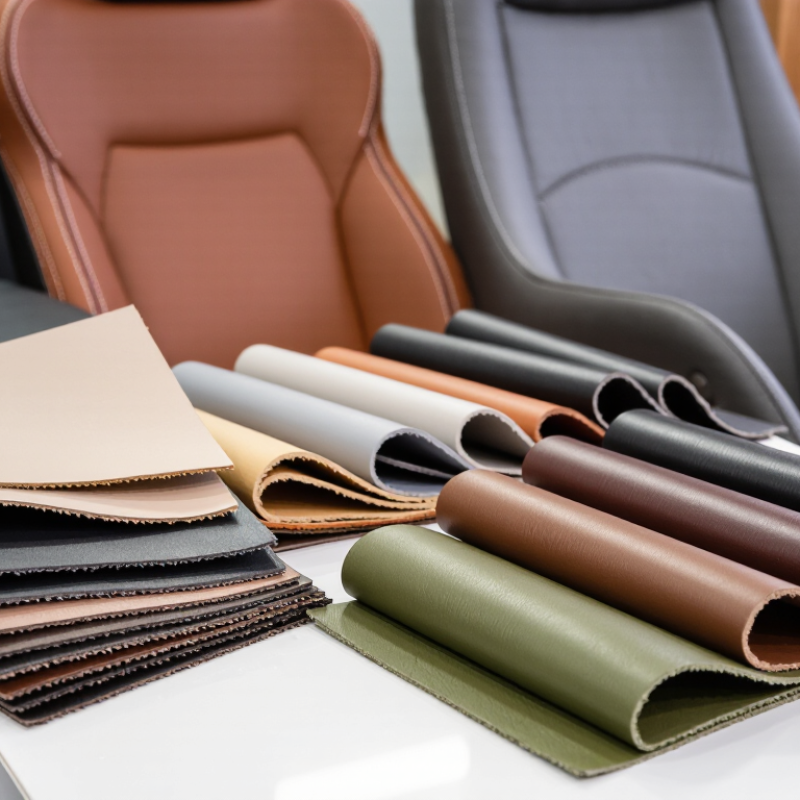
Choosing the right Pu Leather Material is no longer a simple matter of color, softness, or price. Buyers now examine structure, coating chemistry, durability, maintenance, and environmental claims before approving a material. A handbag may look attractive in a showroom, yet crack around its folded corners after several months. That gap between appearance and performance makes material selection a practical engineering decision.
Industry data shows why this decision deserves closer attention. Textile Exchange’s Materials Market Report 2024 states that synthetic fibers represented about 69% of global fiber production in 2023. This scale increases the importance of responsible sourcing, traceability, and end-of-life planning. Grand View Research’s synthetic leather market analysis also identifies automotive, furniture, footwear, and fashion as major application sectors. However, market reports often use different definitions. Their figures should be compared carefully, not copied blindly.
This guide introduces seven useful checks for evaluating Pu Leather Material. They include substrate quality, polyurethane formulation, surface finish, thickness, abrasion resistance, hydrolysis performance, and supplier documentation. Product testing should match the final use. A vehicle seat needs different evidence from a decorative cushion. Request technical data sheets, sample swatches, test methods, and batch information. Feel the sample. Bend it repeatedly. Inspect the reverse side.
Some decisions remain imperfect. A softer finish may reduce abrasion resistance, while a thicker coating can affect flexibility and cost. “Eco-friendly” is also not a complete specification. Ask for measurable evidence, such as recycled content, restricted-substance testing, and verified certification. Reliable suppliers welcome these questions, even when their answers reveal limitations. That honesty is often more valuable than a polished sales claim.
Classify PU Leather by Chemistry: Solvent-Based, Water-Based, and Bio-Based Options
7 Tips for Choosing PU Leather Material
Classify PU Leather by Chemistry: Solvent-Based, Water-Based, and Bio-Based Options
PU leather should be classified by chemistry, not surface appearance. Solvent-based PU uses organic solvents during coating. It often delivers strong adhesion, smooth grain, and fast production. However, solvent recovery and worker protection require strict process control. The European Environment Agency links industrial solvent use with volatile organic compound emissions, so supplier records matter. Ask for VOC test results, residual solvent data, and curing conditions.
Water-based PU uses water as the main dispersion medium. It can lower solvent emissions, but performance is not automatically better. Poor drying may create pinholes, weak bonding, or a slightly cloudy finish. Request abrasion, hydrolysis, flexing, and peel-strength results. Textile Exchange reported 124 million tonnes of global fiber production in 2023, showing the scale of material decisions. Small specification errors can multiply across production.
Bio-based PU replaces part of its feedstock with plant-derived content. That does not mean biodegradable. European Bioplastics reported about 2.18 million tonnes of global bio-based plastics capacity in 2023, with further growth expected. Check the measured bio-based carbon percentage, not vague “green” wording. I have found this distinction easy to miss. A bio-based coating may still contain fossil-based components and require careful end-of-life handling. Performance can also vary between batches. That deserves a second review.
Match Abrasion Resistance to Use: 20,000–50,000 Martindale Cycles for Upholstery
7 Tips for Choosing PU Leather Material
For PU leather upholstery, abrasion resistance should match the furniture’s daily workload. The Martindale test measures rubbing cycles before visible surface wear appears. A rating between 20,000 and 50,000 cycles suits many sofas, dining chairs, and occasional-use seats. However, the number is a guide, not a promise. Not a magic number.
In a family living room, 20,000 cycles may work well with moderate use. Dining chairs often benefit from 30,000 cycles or more because clothing creates repeated friction. Busy offices, waiting areas, and hospitality furniture may need the upper end of this range. Check the test report, not only the product description. Test conditions can differ, and results are not always directly comparable.
Abrasion is only one part of PU leather performance. Inspect the backing, coating thickness, seam strength, and surface flexibility. A material can pass a rubbing test yet crack after repeated bending or strong sunlight. This is an easy detail to miss. Request a physical sample and rub it against denim, examine the reverse side, and test approved cleaning methods. I would also compare the sample after several days of handling, because real use is messier than laboratory testing. A slightly lower rating with better flexibility may outperform a higher rating in practice.
Choosing PU Leather by Abrasion Resistance
Match the Martindale abrasion rating to the expected level of use. Upholstery applications commonly fall within the 20,000–50,000 cycle range.
Higher cycle ratings generally indicate better resistance to surface wear. These benchmarks are practical guidance; final performance also depends on PU formulation, backing fabric, seam construction, cleaning, and usage conditions.
Test Hydrolysis Durability at 70°C and 95% Relative Humidity for 7 Weeks
7 Tips for Choosing PU Leather Material
Choose PU leather by chemistry, not appearance alone. Confirm whether the coating uses polyester or polyether polyurethane. Polyester grades often offer stronger abrasion resistance, but moisture can accelerate hydrolysis. Polyether grades usually resist hydrolysis better. Ask for the resin type, coating thickness, backing composition, and production batch records. Inspect the grain under side lighting. Uneven gloss can reveal weak coating uniformity.
Hydrolysis durability deserves a controlled seven-week test. Expose samples at 70°C and 95% relative humidity for 49 days. ISO 1419 specifies tropical ageing around 70°C and high humidity for coated fabrics. The seven-week period is an extended screening approach, not a universal pass standard. Record mass, color, odor, surface tack, cracking, peeling, and stiffness before testing. Measure coating adhesion with ISO 2411 principles. Check flex resistance after conditioning. Tiny blisters matter.
Cut samples from several areas, including edges and seams. Test at least three pieces from each production lot. Compare them with unaged controls. ASTM D573 also confirms that heat-ageing results depend on time, temperature, and specimen preparation. Do not trust one attractive sample. A strong result at 70°C may still fail in warm, wet daily use. This is where judgment becomes uncomfortable. Seven weeks can expose weakness, but it cannot reproduce every climate, cleaning cycle, or handling habit. Document every change with photographs and measured values.
Verify Safety Compliance Through REACH, RoHS, VOC, and Formaldehyde Testing
7 Tips for Choosing PU Leather Material
When choosing PU leather, verify safety evidence alongside grain, softness, durability, and price. Request a current technical data sheet and a traceable production sample. The sample should match the backing fabric, coating, adhesive, and color used in manufacturing. A beautiful swatch can hide formulation changes.
Ask for REACH testing that identifies restricted substances and tested materials. For electrical or electronic applications, request RoHS testing with clear component details. Do not accept a simple “compliant” statement. Check VOC results for the intended environment, especially enclosed furniture, vehicle interiors, or small rooms. Formaldehyde reports should show the test method, conditioning details, detection limit, and sample description. Use an ISO/IEC 17025-accredited laboratory where available. Small details matter.
Check report dates and batch numbers against your purchase specification. Retest after major changes to the supplier, coating, adhesive, or backing fabric. Keep sealed and exposed samples for future comparison. A chemical odor is a warning, not proof of failure. Low odor does not prove safety either. I would question vague reports with missing laboratory information. Testing one roll cannot represent every future shipment. This limitation is easy to overlook. Careful records reduce uncertainty, but they never replace ongoing quality checks.
Compare Thickness, Tear Strength, Colorfastness, and ISO 105 Performance Data
Choosing PU leather starts with the end use. Upholstery, footwear, and bags need different balances. Record thickness in millimeters, not by touch. A 0.8 mm sheet feels flexible. A 1.2 mm sheet usually offers more body, but not automatically better wear. Request samples from several production areas. Small variation can expose coating problems.
Ask for tear strength using a method suited to the structure. ASTM D1424 reports tear force in newtons, while ISO 4674-1 addresses coated fabrics. Do not compare results from different methods. Inspect cut edges and stitch holes as well. A strong laboratory result can still fail at a needle puncture. I have seen this mistake. The test sheet looked excellent; the seam opened during pulling. Keep the method visible.
Colorfastness needs separate evidence. ISO 105-X12 uses a 1–5 grey scale for dry and wet rubbing. A grade of 4 is generally safer than 3 for touch-heavy products, though requirements differ. ISO 105-B02 uses a blue wool scale from 1 to 8 for light exposure. Ask for the grade, exposure condition, and evaluation date. Check dark colors under white light and daylight. Also review batch consistency, finish adhesion, odor, and flex cracking. These details are easy to overlook.