
Blog
- Home
- /
- Blog
2026 Top Fertilizer Granulation Machine Types for Buyers?
Choosing a granulation machine is not just a matter of comparing output figures. The right choice depends on fertilizer formulation, moisture, target particle size, and available production space. A machine that performs well with one blend may struggle with another. That detail is easy to overlook.
This guide reviews common Fertilizer Granulation machine types, including rotary drum, disc pan, extrusion, and other systems used for different materials and production needs. Each works differently. Drum granulators suit continuous processing, while disc granulators offer visual control over pellet growth. Extrusion systems can produce consistent shapes, but material preparation and operating conditions still matter. These are general comparisons, not guarantees; actual results depend on the feedstock and process settings.
Buyers should also look beyond stated capacity. Check the expected feed rate, moisture requirements, particle-size range, power use, wear parts, and cleaning access. Ask suppliers how performance is tested and whether trials can use a representative fertilizer blend. A neat specification sheet cannot replace that check. Even so, a trial may not reproduce every condition at your plant, so leave room for adjustment.
The sections ahead compare machine types, explain their practical strengths and limits, and outline questions to ask before purchasing. The goal is a clearer shortlist, not a universal winner. A careful choice begins with the material.
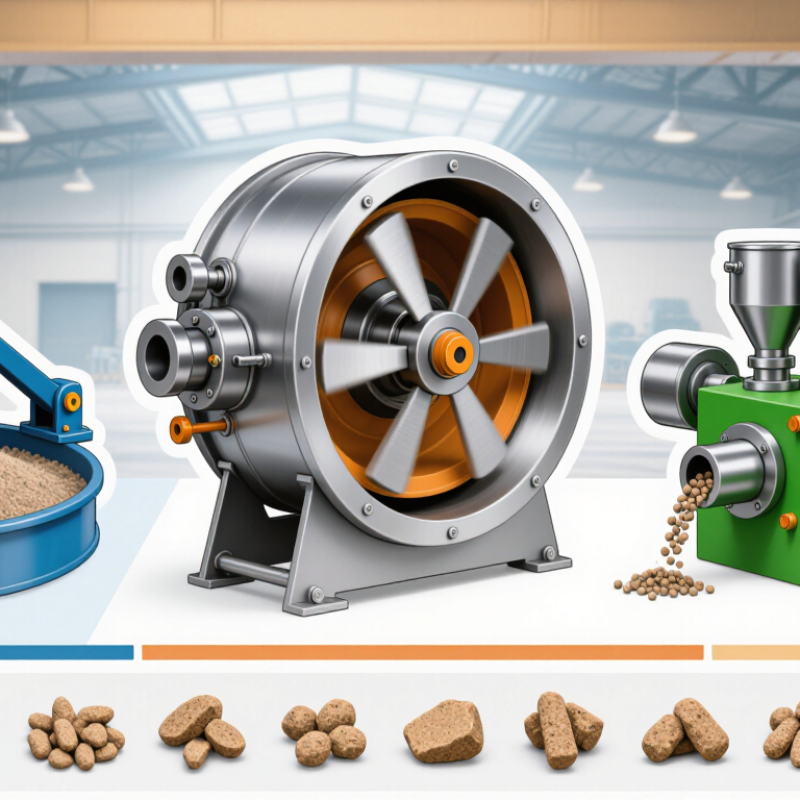
How Fertilizer Granulation Machines Turn Powder into Granules
Fertilizer granulation turns fine powder into larger, easier-to-handle particles. Inside a granulator, powder particles collide and collect around small nuclei. A controlled spray of water or binder helps them stick. Too little liquid leaves dusty fines. Too much can create sticky lumps. Small adjustments matter.
In a rotating pan, material rolls and grows in layers, much like a small snowball. A rotary drum handles a continuous flow and relies on tumbling action. Extrusion presses moist material through openings, forming short, dense pieces. Each method suits different powder properties and production needs. No single route fits every formula. The process is less tidy than diagrams suggest: uneven feed or moisture can quickly affect particle size.
After granulation, drying removes excess moisture and helps strengthen the product. Screens separate usable granules from undersized or oversized material; some off-size particles can be returned for processing. Operators should check moisture, granule strength, and size distribution during routine runs. A batch may look uniform at the outlet but still break during conveying. That is worth checking. Good settings come from measured trials, not guesswork alone.
Main Types of Fertilizer Granulation Machines in 2026
Rotary drum granulators suit continuous, high-throughput production. Their rotating shells mix wet feed with recycled fines, building granules layer by layer. They need room for recycle loops and careful moisture control. Pan granulators offer a clearer view of the process. Operators adjust pan angle, speed, and liquid feed to influence particle size. But small setting changes can shift the size distribution. No machine fits every recipe.
Roller compaction granulators form dense flakes without adding process liquid, making them useful when moisture or drying costs matter. The flakes are then crushed and screened; excess fines may need recycling. Fluid-bed granulators spray liquid onto suspended particles, producing relatively uniform, often porous granules. Airflow and spray control are critical. A real-world caveat: pilot results may not predict production behavior exactly.
The International Fertilizer Association’s Medium-Term Fertilizer Outlook 2024–2028 projects global fertilizer demand at about 202 million tonnes of nutrients in 2028. This is a demand estimate, not a forecast of machine sales or plant capacity. Buyers should match equipment to feed chemistry, moisture, target granule size, and throughput, then test representative material. A specification sheet alone can mislead. Inspecting trial granules for dust, breakage, and size consistency gives a more useful comparison.
| 2026 Top Fertilizer Granulation Machine Types for Buyers? - Main Types of Fertilizer Granulation Machines in 2026 | ||||||
|---|---|---|---|---|---|---|
| Machine Type | Granulation Principle | Typical Feed Materials | Typical Product Form | Main Advantages | Key Considerations | Often Suited To |
| Rotary Drum Granulator | Rotating drum tumbles the feed while liquid binder, water, or steam encourages particles to agglomerate and grow. | Blended mineral fertilizer ingredients, NPK mixtures, and some processed organic materials. | Rounded agglomerates; size distribution depends on the feed, operating conditions, and screening setup. | Continuous operation; suitable for integrated production lines and comparatively large throughputs. | Usually needs downstream drying, cooling, and screening. Feed moisture, binder addition, and recycle ratio need control. | Plants seeking continuous wet granulation of blended fertilizer formulations. |
| Disc (Pan) Granulator | A rotating, inclined pan rolls wetted particles into granules; pan angle, speed, and liquid addition affect growth. | Powdered fertilizer blends, mineral fines, and selected organic fertilizer feeds. | Generally rounded granules, with size influenced by pan settings and screening. | Visible, accessible granulation zone; operating adjustments can help control granule growth. | Typically requires moisture management and product screening. Capacity and results depend strongly on feed properties and operating practice. | Operations that value adjustable batch-like control or a comparatively straightforward granulation stage. |
| Extrusion Granulator | Moistened or conditioned material is forced through openings in a die, forming strands or shaped particles that are cut or broken. | Suitable organic fertilizer mixes, compost-based feeds, and other formulations that can be conditioned for extrusion. | Cylindrical, short-rod, or other die-shaped pellets; shape depends on the die and cutting arrangement. | Produces formed pellets without relying on a rolling bed; die openings allow the product shape to be selected. | Feed moisture, consistency, and particle size affect performance. Dies and other wear parts require inspection and maintenance. | Producers making shaped pellets from compatible, well-prepared organic or blended feeds. |
| Roller Compaction Granulator | Opposing rollers compact dry or conditioned powder into flakes or compacted material, which is then crushed and screened. | Powders and fertilizer blends suitable for compaction, including processes where adding liquid is undesirable. | Crushed, angular granules rather than uniformly spherical granules; fines may be recycled. | Dry granulation can reduce or avoid liquid-binder use and may avoid a wet-granulation drying stage. | Product strength and granule size depend on feed behavior and compaction settings. Crushing and screening are generally part of the process. | Formulations that are compatible with compaction and production lines designed for dry granulation. |
| Fluidized-Bed Spray Granulator | Air suspends particles while a sprayed liquid binds or coats them; repeated wetting and drying grows the granules. | Fine particles and formulations that can be processed using a suitable spray liquid and controlled airflow. | Granules or coated particles; final size and structure depend on the process recipe and equipment configuration. | Can combine granule growth and coating in a controlled process; airflow also supports drying. | Requires careful control of spray rate, air conditions, and feed behavior. Air handling and process setup are important considerations. | Specialty or controlled processes where spray granulation or coating is required. |
Buyer note: Machine suitability depends on the fertilizer formulation, feed moisture and particle size, target granule properties, required capacity, and the complete drying, cooling, screening, and recycle arrangement. Confirm these factors with process trials or a supplier’s application assessment before selecting equipment.
How Granulator Types Handle Different Fertilizer Materials
2026 Top Fertilizer Granulation Machine Types for Buyers?
How Granulator Types Handle Different Fertilizer Materials
Choose a granulator by how the material behaves, not by machine popularity. Rotary drums suit wet mixes and slurry-coated particles, such as blended mineral fertilizers. Their tumbling action builds granules gradually, but excess moisture can create sticky lumps. Moisture changes everything. Pan granulators offer a clear view of the rolling bed and suit flexible production runs. However, sticky feed may cling to the pan instead of forming even granules.
For dry, free-flowing powders, roller compactors press material into flakes or sheets before crushing and screening. They add little water, which helps when drying capacity is limited. Yet pressure and recycled fines affect granule strength. Organic blends can vary in fiber and moisture; a rotary drum may handle this variation, but screening and recycle rates need close attention. Not always.
The International Fertilizer Association’s 2024 medium-term outlook estimated global fertilizer consumption at about 205 million tonnes of nutrients in 2024. That scale makes material-specific equipment choices important, though market demand cannot predict how a particular feed will run. Tips: Test the actual blend, not just a clean laboratory sample. Record moisture, particle size, and crush strength across a full shift. Small details matter. A pilot test may still miss seasonal changes in raw materials.
Key Performance Factors Buyers Should Compare
Buyers should compare saleable output, not the machine’s headline capacity. The FAO report World Fertilizer Trends and Outlook to 2026 projected global demand for nitrogen, phosphate, and potash nutrients at 208.5 million tonnes in 2026. That scale makes consistent output important, but it does not prove a particular granulator will suit your feed.
Check the share of granules within your target size range, plus fines and oversized material. Ask suppliers to test your actual recipe and report results at a stated moisture level. Measure the fines. Also compare energy use per tonne, water demand, and cleaning time. One uncomfortable point: a neat capacity figure can hide frequent stoppages or extra screening.
Drum, disc, and compaction systems handle materials differently, so compare them using the same feedstock and operating conditions. Request a continuous-run trial, not only a short demonstration. Record throughput, product-size distribution, power draw, and the time needed to clear buildup. FAO demand forecasts describe market scale, not machine performance; buyers still need site-specific evidence. A modest test may expose weak granules that look fine at the outlet. Ask for the raw trial measurements, including rejected product.
How to Choose a Granulator for Your Production Line
Choosing a fertilizer granulator starts with the feed, not the machine catalogue. Check moisture, particle size, abrasiveness, and binder behavior using representative samples. A rotary drum suits continuous, higher-volume wet granulation; a pan offers adjustable operation for smaller or changing batches. Dry compaction can suit moisture-sensitive powders, but the resulting granules may need crushing and screening. Start with the feed. Then test.
The International Fertilizer Association’s 2024 medium-term outlook projected global fertilizer demand at 196.3 million tonnes of nutrients in 2024/25, up 2% year on year. This is nutrient demand, not finished granule tonnage, but it signals the importance of dependable capacity. Match rated output to your actual product mix, operating hours, and expected recycle load. Ask suppliers for a pilot run using your material, and inspect granule size distribution, crush strength, dust, and energy use. A clean brochure figure is not a production guarantee. Recycle load is easy to underestimate.
Tips: Compare equipment using the same feed recipe and test conditions. Check wash-down access, wear-part replacement time, and screen changes. Keep some capacity margin, but avoid buying for a peak rate your line rarely reaches. A small trial can reveal awkward handling issues before installation.